

That is what we want…a doctor who has good news. When the doctor steps through the door bright eyed with a smile on his face…thats a good start.
The ‘beloved physician’ whom we have been tracking along with in our exploration of the Luke-Acts narrative has “good news” to put before us. It is “good news” that is explained to us in such a way as to further ground our confidence in the unity and oneness of the scriptures. To say it another way in the words of Jesus, “Scripture cannot be broken” (John 10:35).
All of scripture is one body of divinely given and revealed truth. The Good Doctor presents the unity of the gospel message (the good news) across the Old and New Testaments. We will see this in how he introduces gospel preaching in each of his narratives (Luke and Acts).
Let us remember that as our Good Doctor pens both of these books he does so with similar motives (Luke 1:1-4; Acts 1:1-3) and methods. That is to say, when something in Luke seems to reflect, parallel, or connect to content in Acts, we ought to pause and consider why. Today we will consider the similarities of the preaching ministry of two men, one a prophet of the Old Testament and the other an apostle of the New Testament.
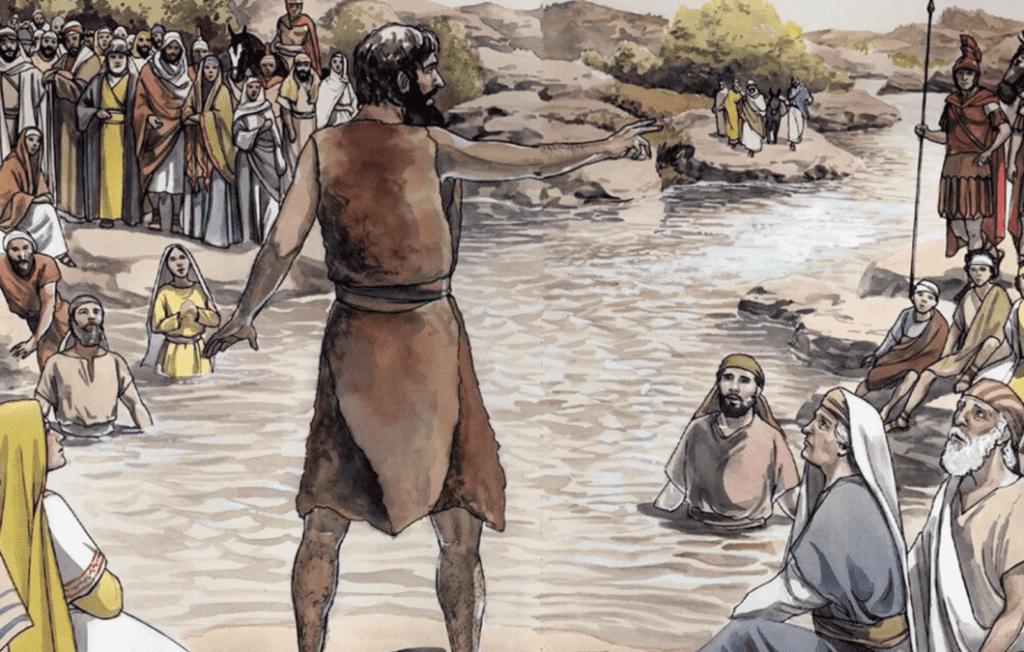
The Prophet John (the baptist) and the Apostle Peter
John was the final prophet of the Old Covenant era (commonly called the Old Testament…although his ministry is recorded in the New Testament it was still the age of the Old Covenant, prior to the death of Jesus). John was not only the final prophet but he had even been prophesied of (Mal. 3:1). Peter was the first great leader of the New Covenant people of God, the church. What is striking is the similarity of their messages.
- Each is a preacher within a different covenant in God’s redemptive history, yet the similarity of their messages demonstrates the centrality of the gospel in all ages.
- This would not be as significant if we were talking about Matthew or Mark’s account of John’s ministry, and how it parallels Peter in Acts. This is noteworthy because the same author writes both accounts. As we see the similarities we ought to ask: Why did Luke write down each man’s preaching in a way that blatantly shows them to be connected?
- What is more is that each sermon is the first preaching in each narrative; that is to say, that the same theology is presented first in sermon form to set up a theological foundation for the teaching that is to come later in the narrative.
The Prophetic and Apostolic Preaching
Let us consider their similarities by looking at the content of their preaching:
- Acts 2:37 “…what shall we do?” & Luke 3:10, “And the crowds asked him, “What then shall we do?
- Acts 2:38 “Repent and be baptized every one of you in the name of Jesus Christ for the forgiveness of your sins.” & Luke 3:3, “John went…proclaiming a baptism of repentance for the forgiveness of sins.
- Acts 2:38 “…receive the gift of the Holy Spirit…” & Luke 3:21-22, “when Jesus also had been baptized and was praying, the heavens were opened, and the Holy Spirit descended on him…”
- Acts 2:40 “And with many other words he bore witness and continued to exhort them…” & Luke 3:18, “So with many other exhortations he preached good news to the people.”
- Acts 2:40 “Save yourselves from this crooked generation.” & Luke 3:9, “Even now the axe is laid to the root of the trees. Every tree therefore that does not bear good fruit is cut down and thrown into the fire.”
- Acts 2:45 “And they were selling their possessions and belongings and distributing the proceeds to all, as any had need.” & Luke 3:11-14, “And he answered them, “Whoever has two tunics is to share with him who has none, and whoever has food is to do likewise.” Tax collectors also came to be baptized and said to him, “Teacher, what shall we do?” And he said to them, “Collect no more than you are authorized to do.” Soldiers also asked him, “And we, what shall we do?” And he said to them, “Do not extort money from anyone by threats or by false accusation, and be content with your wages.”
It seems like Luke is telling the same story over again, first in Luke then in Acts. Now let me add a few comments.
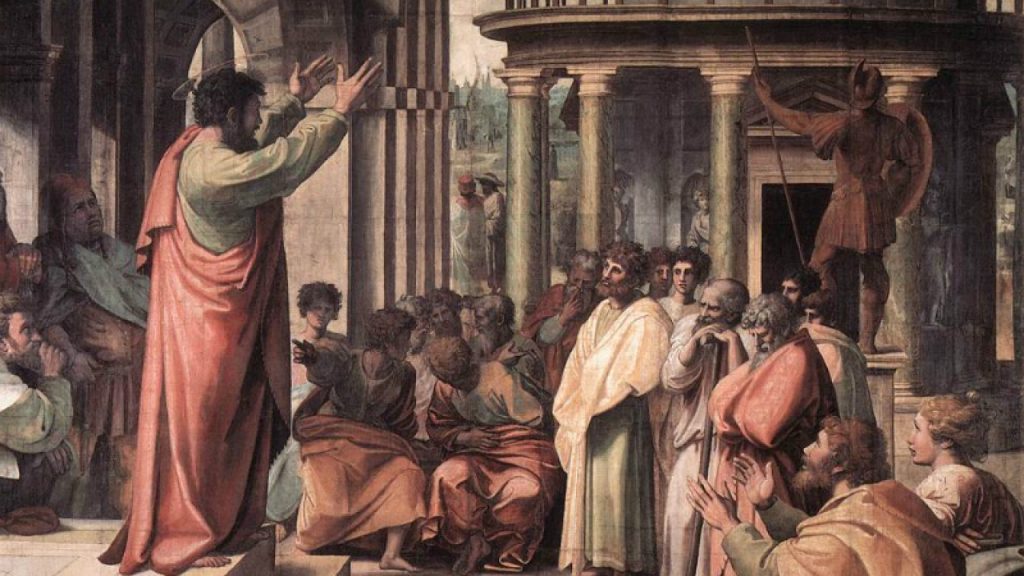
I believe that the connections between Luke 3 and Acts 2:37, 38, 40a are pretty clear. However, let me explain in short why I have made the last two points.
- Acts 2:40 & Luke 3:9 – There is no connection by words or phrases, but in concept. Both the prophet John and apostle Peter preached of coming judgement on apostate Israel (I might get more detailed in weeks to come on that judgement). Both preachers within both covenant/ testamental periods preach of judgement to come.
- Acts 2:45 & Luke 3:11-14 – In both stories we see contentment and generosity. One story exemplifies these (Acts 2) while the other story exhorts (Luke 3). Both stories demonstrate a biblical expectation that God’s people are marked by a contentment with God’s provision that propels them on to be generous.
In a way Luke 3:3-18 and Acts 2:37-45 are the same story. As we noted above: each sermon is the first preaching in each narrative; that is to say, that the same theology is presented first in sermon form to set up a theological foundation for the teaching that is to come later in the narrative.
However, in seeing the similarity we find a difference that shows how God’s work had progressed. From the days of John, the last prophet there by the Jordan river to the time of the apostles in Jerusalem for Pentecost a great work had been done.
Final Thoughts
Notice the key difference in the baptism. Peter proclaimed a message regarding baptism that John did not: “be baptized every one of you in the name of Jesus Christ.”

Photo by Aaron Burden on Unsplash
They both preached the same gospel, yet one was clearer and more developed. This becomes a concise example for us by the Good Doctor of what the Bible does from Genesis to Revelation. From the promise of the Seed of the woman crushing the serpent (Gen. 3:15) to the Dragon being thrown into the lake of fire (Rev. 20), the gospel has been pronounced. The gospel has been heard since the moments that followed the fall of humanity in the garden of Eden. However, its clarity is developed as God’s work goes on across time.
Between John’s ministry at the Jordan and the apostolic preaching on Pentecost Christ had ministered as the Messiah culminating in his death, resurrection, and ascension. From the Father’s right hand Jesus sends the Holy Spirit to lead and empower his apostles. Though we indeed see continuity of the prophets and apostles’ preaching Christ centered messages, it is within the clarity of the New Testament-Apostolic message that Jesus is proclaimed as the Christ. The prophet John in all of his might never preached that message for the Spirit had not made it known to him as it had to Peter.
So What?
We see the care and precision of the human author. The books of scripture were not randomly and mindlessly complied. Luke gives us “an orderly account” (Luke 1:3). This should bolster our confidence in the words of God given by the Spirit to holy men to pen down.
Our commitment to the doctrines of baptism, repentance, forgiveness, judgement , Holy Spirit, and generosity should be firm in belief and practice when we see that both the prophets and apostles proclaimed them. May the Holy Spirit minister in our hearts and work in us a stronger faith in these things as proclaimed and witnessed to by the preachers of the Lord’s gospel.
 The Reforming Raker
Really good. I’ve never heard a preacher compare these two books. Good stuff!
Love you! Mamaw
LikeLike