

If you read my last post you might have had a few questions. For one…if you wondered about my marriage to Hannah…we are good…loving each other…gladly welcoming a baby into the world…literally at any minute (I simply wanted a provocative title). As for other questions, maybe you wondered about why we obey the fourth command on the first day of the week when the command speaks of the seventh day. You also may have wondered why we don’t stone those who break the Sabbath. These are good questions that ought to be asked and explored if we are to better our understanding of how we obey the fourth command.
First Day or Last Day…Saturday or Sunday
Why do we enjoy the weekly Sabbath rest on Sunday if the command was regarding Saturday, the seventh day?
Here we have to begin to explore what was discussed previously: some rules applied to the Sabbath in the Old Covenant strictly with regard to what it was to Israel as pertaining to the ceremonial law, that is what was unique to it in the Old Covenant.
We remember that the Law of the Old Covenant, especially the Ten Commandments, was rooted in creation. The moral principles given in those commands were not new. Those moral concepts began in the creation narrative of Genesis 1-3 and are further clarified by God’s commands on Mt. Sinai in Exodus 20.
The Sabbath is the same. The fourth command follows the flow of the creation account which sanctified the seventh day for on it God finished and rested from his work (Gen. 2:1). The work of creation was miraculous and majestic; it was natural to celebrate it. However, another work of creation came thousands of years later by the cross and empty tomb 1 Cor. 15:23) that would give rise to a new time with a new weekly Sabbath. Jesus finished and rested form his work on that Sunday morning, the first day of the week, two thousand years ago. He accomplished a greater work than even the creation of the beginning. In the beginning God created all things from nothing (Heb. 11:3) yet Christ begins the work of making all things new. His work is to take what is marred and poisoned, twisted and wicked, and then renew and restore (Col. 1:20). The greater creative work in Christ’s death and resurrection began a new age. This new age is often called the New Covenant (Jer. 31:33-34; Heb. 8:10-11). In this new age there is a place for a new day to be sanctified.
I heard a pastor once liken this change to football. If a team wins the regional championship they celebrate that effort. But if they go on to win the state championship they no longer celebrate the old work but now the new and greater work. It would be nonsensical and unnatural to celebrate the regional title when they have accomplished something so much greater.
In the New Covenant we celebrate the greater work on the day it was finished and its Architect rested. To sanctify Saturday, the day original creation was complete would be nonsensical and unnatural since Jesus has accomplished the work for the New Creation (2 Cor. 5:17).
In summary, we in the New Covenant, Jew and Gentile, obey the fourth command by sanctifying the first day, the day on which we memorialize a greater creative work.
Stone the Forsakers of the Assembly
Why do we not punish the Sabbath breakers with death as they did in Exodus and Leviticus?
The answer to that is quite similar to what we discussed above. Much of our heavy lifting is done. We have to remember that part of the Sabbath laws are within God’s eternal moral law (i.e. the Ten Commandments) while other laws were ceremonial, and so particular to Israel in the Old Covenant.
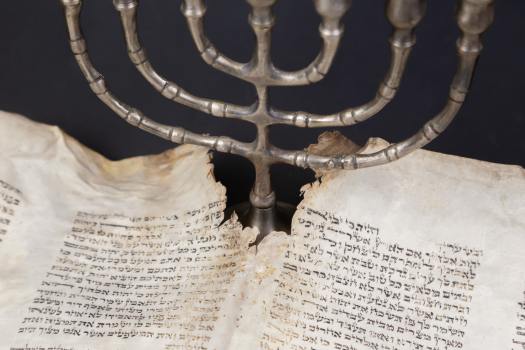
The death penalty was tied to the religious and ceremonial laws of Israel within the Old Covenant. In other words in the time of Israel the Sabbath principle existed simultaneously in both the moral law and the ceremonial law ( which was fulfilled in Christ). So also, now we live Sunday to Sunday under the moral weight of God’s law as revealed in the Ten Commandments while also enjoying our relationship to Christ as a new Sabbath rest for God’s people.
The Sabbath has always had two functions for God’s people within their covenant relationship to God: a day of rest and a unique role for that specific covenant. We no longer have special sabbaths or sabbath years for we have Christ. The religious shadows of the old sabbath weeks, months, and years are done (Gal. 4:10; Col. 2:16) for Christ the substance of the shadow has come. We have Christ by faith, and rest therein for our souls, as well as weekly rest in accordance with God’s creation design.
Closing Thoughts
These two questions arose in my thinking as I wrote my previous post on the Sabbath. I hope these two thoughts are helpful in considering the role of the Sabbath for today in light of the fourth commandment.
I would love to hear other questions regarding why and how we observe the Sabbath in the New Covenant. Please leave a comment or a question. I will do my best to provide an answer.
Have a blessed Lord’s Day with the Lord’s people in the Lord’s way.

 The Reforming Raker
Well said! Good explanation. The example of the regional championship versus the national championship really works!
Love you! Praying for Hannah and the baby! And for Daddy!
Mamaw
LikeLike
Thank you Mamaw…I too found that football analogy to be helpful. I have enjoyed writing on this command as we look at it on Sundays…however…I’m glad to have a Sunday off tomorrow:) A friend is coming in to preach on Revelation 2:12-17 on the church in Pergamum.
LikeLike