

What does God want us to learn from the first chapter of the Bible? If I were to answer that question based on what I’ve heard collectively and frequently I would say it was God giving an argument against Charles Darwin and his theory of Evolution. True enough there is a place for Genesis 1 in the creation vs evolution debate, however there are far greater purposes for that chapter.
Should you ever take a moment to glance over Matthew Henry’s Commentary on this chapter you will find his notes to be far more about theology and Christian life, and not so much an argumentation against atheism or evolution.
Today, in continuing from the last post, I wish for us to discuss how the first two verses of the Bible begin to teach us of baptism.
Genesis 1:1-2
In Bible study it is most helpful to note that all fundamental doctrine (some would say “all doctrine) found in the Bible is first seen in Genesis 1-3. It can be said that the flower that is the doctrine of the New Testament is seen as a seed in the first three chapters of holy scripture. So it is true of baptism.
This is how we see baptism in Genesis 1:1-2.
In the last post we noted that Paul references the Red Sea crossing and Peter references the Flood of Noah’s day as vague examples of baptism. With that in mind we need to take one step into both Genesis and Exodus at the same time:
- Genesis and Exodus form one narrative. They are two books, yet intended to be read as a saga, they compliment each other.
- Also it is helpful to remember that they share one author: Moses. Moses at times uses virtually the same language in different stories across Genesis and Exodus to show continuity. However, it is more than continuity, it is also sameness. We could say that Moses speaks of the same doctrines, yet gives them to us in different stories. See below:
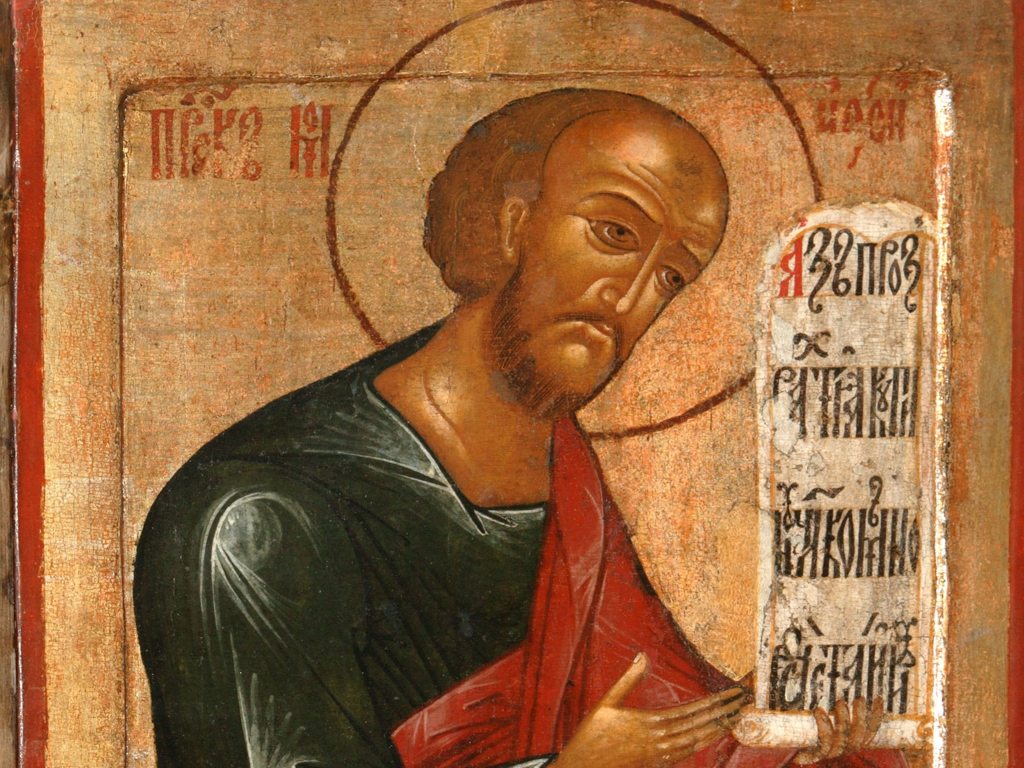
In the beginning, God created the heavens and the earth. The earth was without form and void, and darkness was over the face of the deep. And the Spirit of God was hovering over the face of the waters.
But God remembered Noah and all the beasts and all the livestock that were with him in the ark. And God made a wind blow over the earth, and the waters subsided.
Then Moses stretched out his hand over the sea, and the LORD drove the sea back by a strong east wind all night and made the sea dry land, and the waters were divided.
Genesis 1:1-2; 8:1; Exodus 14:21
What do we find connecting these three stories, two of which are clearly used by the apostles to exemplify New Covenant Baptism?
- Wind and Spirit: In Hebrew the word is the same (ruah). What we find we could describe as the Spirit of God at work, manifest as a wind.
- By the Spirit the waters are moved making way for creation.
In each story the activity of water and Spirit, what the apostles compared to baptism, precedes a new beginning. At creation it was the beginning, with Noah it was a refreshment of the creation, and with Moses it was a new beginning for God’s people.

The Old Testament pattern pointed to by the apostles was baptism then new creation.
Bringing it all Together
If at first glance it seems disturbing to say: first baptism then new creation. Allow me to explain.
The given order may not strike a presbyterian or a reformed brother as oddly as it seems to my baptist ears. For a baptist it almost sounds like baptism saves, that it is more than symbolic (more on that in the next post [Acts 2:38; 22:16; 1 Peter 3:20-21]). To understand this order of the water preceding a time of new creation we must ask: What is the truest of baptisms to occur in biblical teaching?
It is the “baptism of Christ”. To be clear I am not primarily referring to Jesus being baptized by John in the Jordan river at the beginning of his earthly ministry, but of another and greater baptism: the cross. In Mark’s gospel the events are tied together grammatically, that is to say that the event at the Jordan and the event at Calvary are connected by similar descriptions of both.
Yet it is the greater of the two that took place at Calvary and is referred to as a baptism at least twice in the New Testament. We read one of these reference also in Mark,
Jesus said to them, “You do not know what you are asking. Are you able to drink the cup that I drink, or to be baptized with the baptism with which I am baptized?”
Mark 10:38
This is a reference to the cross for it speaks of an event yet to come, and because Paul also speaks of Jesus’ death in this way.
In him also you were circumcised with a circumcision made without hands, by putting off the body of the flesh, by the circumcision of Christ, having been buried with him in baptism, in which you were also raised with him through faith in the powerful working of God, who raised him from the dead.
Colossians 2:11-12
In this passage circumcision and baptism carry very similar meanings. They are both signs of a covenant: circumcision with the Old and baptism with the New. This text speaks of the same events as does Mark 10:38: the cross. It is by the cross, Christ being cut off from fellowship with the Father by a baptism of judgement, that our hearts are circumcised unto new creation life.

Your baptism into water upon conversion is a blessed gift from God, but it is not the fundamental baptism for your justification. Christ, in whom the promises of God find their yes; he who came to fulfill the law; he who is the substance of every Old Covenant shadow (Passover Lamb and covenant circumcision) is the one who under goes the truest and greatest of baptisms. It is by Christ being cut off (circumcised) on the cross by the flood of God’s judgement that new life is made possible for both the children and the creation of God (Colossians 1:15-20).
It is Christ’s baptism that saves.
“Well then”, we might ask, “why should the believer be baptized? If it is not fundamental to our regeneration and justification, why do it?
That we will look at next time. We will see from the book of Acts and the teaching of Peter that baptism is far more significant than we baptists often credit it for.
Conclusion
Once again we see how doctrine of the Old Testament impacts our understanding of New Testament teaching. What we are taught of water and the Spirit bears weight, yet also the doctrine of circumcision in the Torah (Gen. 17 & Deut. 30:6) gives us much truth to work with in pursuit of more fully appreciating baptism. See in Romans 4 how Paul leans on this doctrine to establish his doctrine of justification and prepare to teach on baptism in Romans 6:1-11.
It is Christ’s circumcision by a baptism of judgment that prepared the way for the New Creation.


Really good!! Looking forward to the next one!
LikeLike
Thank you Mamaw!
LikeLike