
Conversation with friends
Several years ago while I was studying for the ministry I met with a couple of older and more experienced pastors to run some questions by them. I do not remember what those questions were but somehow we ended up on the topic of the millennium. This part of theology was so new to me. There seemed to be, and still seems to be, many facets to that study: rapture, tribulation, millennium, etc. The list seems almost endless. Maybe you can relate to that. There always seems to be another Bible study to be had or passage to check out so that we are one step closer to cracking the code.
As I continued that discussion one of them told me, “An important question to answer as you work through these doctrines is this: ‘How many resurrections and judgements will there be in the end‘?” Several years removed from that conversation and I have come to whole heartedly believe that we can save ourselves much time and difficulty by answering that very question.
Part of what has brought me to believe this to be a healthy path to take is by what is recorded in the historic, protestant confessions. I explained in the previous post why we should utilize creeds and confessions. In those we can see what a variety of men from different times and places have said about the resurrection and judgement. If you have not read the previous post I would encourage it before going further.
Creeds and Confessions
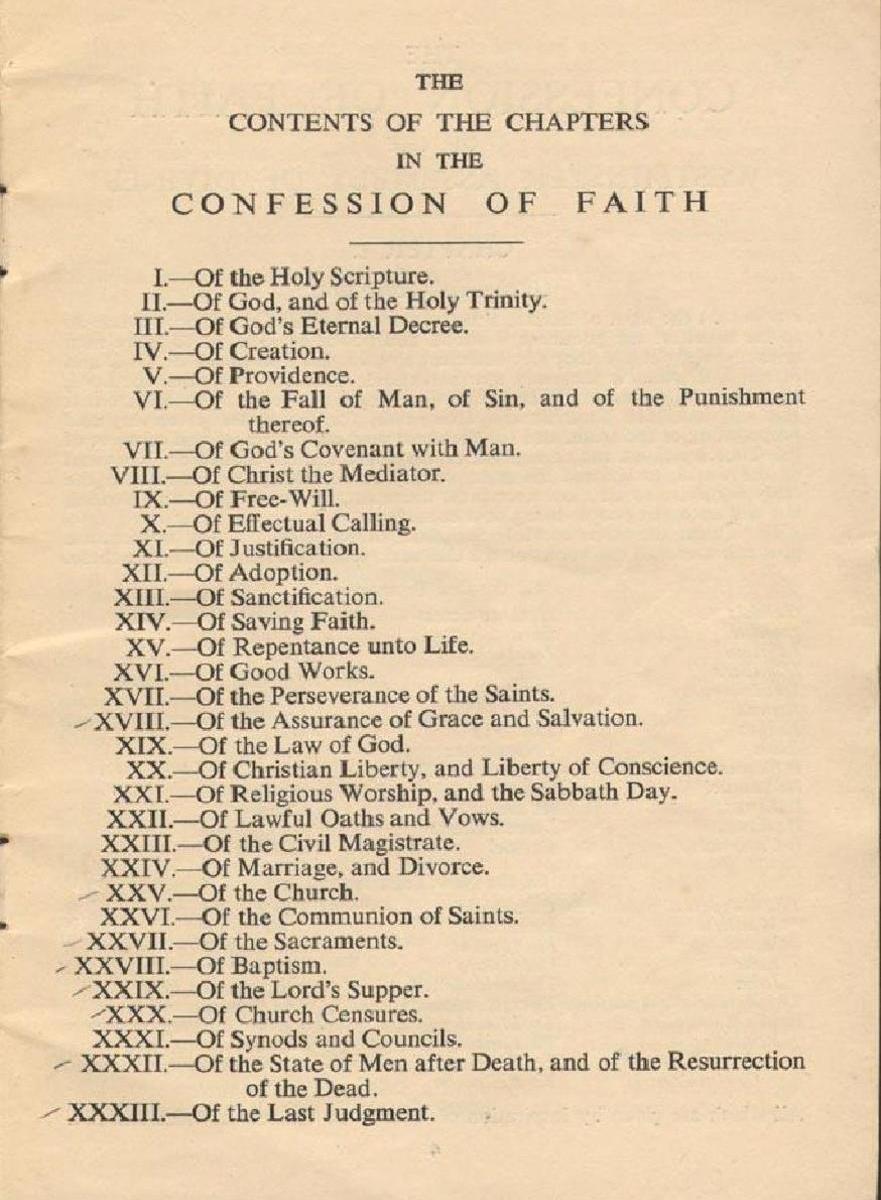
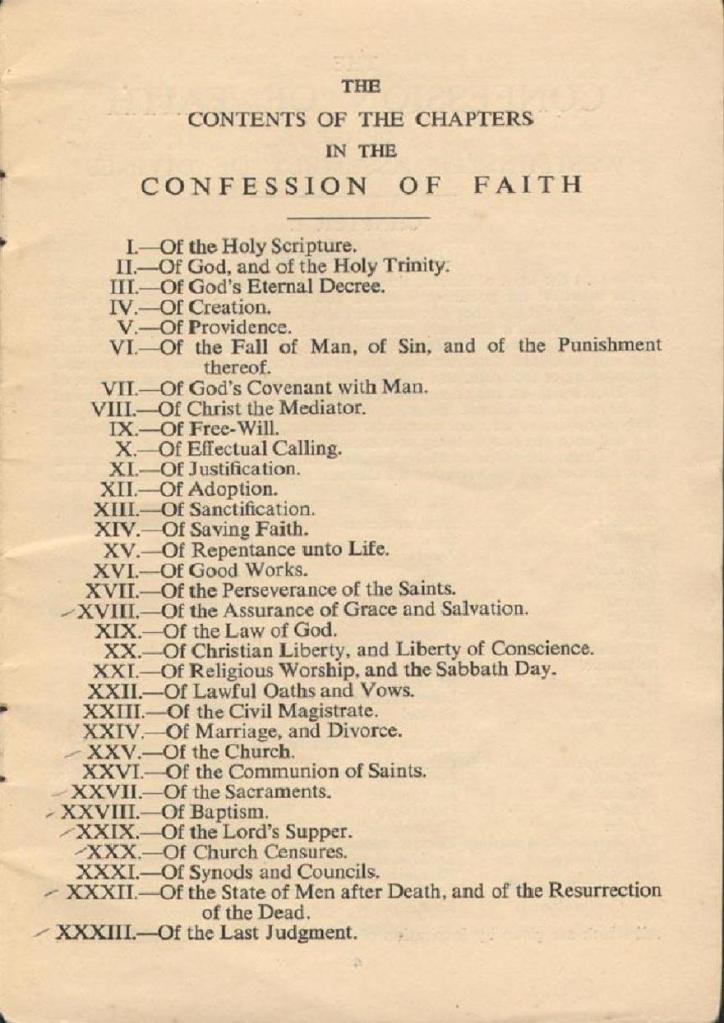
Have you ever thought: I want to learn more about the Trinity…or Creation…or Sanctification…or Repentance…or the Lords’ Supper. A Confession is a good place to start. Generally speaking confessions of faith will have a table of content where you can find specific topics such as the ones named above. When you go to the desired chapter (article / section) you often will find a list of scriptures which match the doctrine taught in that chapter. Those are the passages which are most helpful for the study of that topic. To take it a step further look at various confessions (for me its usually the London Baptist Confession, Westminster Confession, and Belgic Confession) and see which passages they all reference on the same topic. In that you can see which passages are considered to be key to the doctrine you are studying by these various protestant denominations.
For our study we find John 5:24-29 & 1 Corinthians 15:50-53 to be central according to the three confessions named above (from here referred to as LBC, WCF, & BC). Although we will not dig into them we also have Matthew 25:31-46 & 1 Thessalonians 4:13-18 as key passages according to LBC, WCF, & BC. In these four texts the final resurrection and judgement are the threads of continuity.
I believe that I will revisit the teaching found in Matthew 24-25 (The Olivet Discourse) later when I preach its parallel text in Mark 13 at church.
Let’s take a look at those three confessions. I will note quickly some other confessions that are also helpful: Augsburg Confession Art. 17, Dordrecht Confession ch. 18, Savoy Declaration ch. 31&32, & New Hampshire Confession ch. 18. Now let us see what our three confessions say of this doctrine. The statements about the resurrection will be in bold, and those of the judgement will be underlined:
London Baptist Confession & Westminster Confession
(for our purposes they are identical in these two chapters):
- At the last day, such of the saints as are found alive, shall not sleep, but be changed; and all the dead shall be raised up with the selfsame bodies, and none other; although with different qualities, which shall be united again to their souls forever.
- The bodies of the unjust shall, by the power of Christ, be raised to dishonour; the bodies of the just, by his Spirit, unto honour, and be made conformable to his own glorious body.
- God hath appointed a day wherein he will judge the world in righteousness, by Jesus Christ; to whom all power and judgment is given of the Father; in which day, not only the apostate angels shall be judged, but likewise all persons that have lived upon the earth shall appear before the tribunal of Christ, to give an account of their thoughts, words, and deeds, and to receive according to what they have done in the body, whether good or evil.
- The end of God’s appointing this day, is for the manifestation of the glory of his mercy, in the eternal salvation of the elect; and of his justice, in the eternal damnation of the reprobate, who are wicked and disobedient; for then shall the righteous go into everlasting life, and receive that fulness of joy and glory with everlasting rewards, in the presence of the Lord; but the wicked, who know not God, and obey not the gospel of Jesus Christ, shall be cast aside into everlasting torments, and punished with everlasting destruction, from the presence of the Lord, and from the glory of his power.
- As Christ would have us to be certainly persuaded that there shall be a day of judgment, both to deter all men from sin; and for the greater consolation of the godly in their adversity: so will He have that day unknown to men, that they may shake off all carnal security, and be prepared to say, Come Lord Jesus, come quickly, Amen..
Belgic Confession:
- Jesus Christ will come from heaven, bodily and visibly, as he ascended,with great glory and majesty, to declare himself the judge of the living and the dead. He will burn this old world, in fire and flame, in order to cleanse it. Then all human creatures will appear in person before the great judge— men, women, and children, who have lived from the beginning until the end of the world. They will be summoned there “with the archangel’s call and with the sound of God’s trumpet.” For all those who died before that time will be raised from the earth, their spirits being joined and united with their own bodies in which they lived. And as for those who are still alive, they will not die like the others but will be changed “in the twinkling of an eye” from perishable to imperishable. Then the books (that is, the consciences) will be opened, and the dead will be judged according to the things they did in the world, whether good or evil. Indeed, all people will give account of all the idle words they have spoken, which the world regards as only playing games. And then the secrets and hypocrisies of all people will be publicly uncovered in the sight of all.

We will focus on the phrases which are bold and those which are underlined. We will work our way through John 5:24-29 and 1 Corinthians 15:50-53. The reason we will focus on these two is that they deal intentionally with the resurrection and judgement. For further reading be sure to checkout Matthew 25:31-46 & 1 Thessalonians 4:13-18.
One last thought before we look at the texts which give foundation to these statements. Consider this about the confessions quoted above. These are 300+ year-old statements of faith which were constructed by respected theologians of their time. Not only that but that work they have preserved has been affirmed and utilized by generations of believers, families, church, and Bible teachers from three prominent strands of the protestant faith. In other words we should think long and hard before dismissing them as man made teaching of “old dead guys”.
Resurrection and Judgement According to John 5:25-29
“Truly, truly, I say to you, an hour is coming, and is now here, when the dead will hear the voice of the Son of God, and those who hear will live. For as the Father has life in himself, so he has granted the Son also to have life in himself. And he has given him authority to execute judgment, because he is the Son of Man. Do not marvel at this, for an hour is coming when all who are in the tombs will hear his voice and come out, those who have done good to the resurrection of life, and those who have done evil to the resurrection of judgment.
John 5:25-29
Here we find a comparison and contrast regarding the works of Jesus. Obviously much can be said of this and much has been over the centuries. For our purposes I would like to draw out a few points from the highlighted portions.
- The comparison we see is the ability for Jesus to give life to the soul and also the body. He says he has life in himself, a statement of divinity. This ability enables him to resurrect the soul (Eph. 2:1-5) and body
- The contrast is two fold. The distinction made is critical to our study of the resurrection: A) The work of giving life to the human soul “is now here.” It was a present reality in the days of Jesus’ ministry on earth. In other words folks were being born again by the Spirit. This stands in contrast to the second reference to the giving of life. The “hour” for that had not yet come but was “coming”. It is future; it had not yet arrived. This is still future for us. Two different kinds of life are given on two separate occasions. Now B) We have two designated groups who are the recipients. This point I hope to make thoroughly and clearly. The first group is limited to: “those who hear”. It is “those who hear” who are recipients now in this “hour” of eternal life. They have been born again from above. This is in contrast to the future giving of life in the hour to come “when all who are in the tombs will hear his voice and come out.” In the words of the Belgic confession, “men, women, and children, who have lived from the beginning until the end of the world.” This is an hour when all will be raised from their grave.
What we take from this comparison is as follows: Just as the life put into the soul is instantaneous and effective when Christ calls to those who hear, so also will the call of Christ at the last hour be effective and instantaneous to all who hear, all who are in the graves. There will be one resurrection.
Now if you have some history with this subject and object to one resurrection in light of Revelation 20 I would encourage you to at least give ear to this sermon by Voddie Baucham in which he discusses the concept of life and resurrection in the books written by John (Gospel, Letters, and Revelation). Baucham interacts with this passage in connection to Revelation 20. Now I digress.
We will not here go into all of the implications of one resurrection: 1) Because we still need to look at 1 Corinthians 15, which will be in the next post. 2) The purpose of this post was only to observe how historically protestants have viewed the resurrection at the end as one event, not two or three.
Conclusion:
As I said at the beginning, the question of how many resurrections and judgements is foundational to much else that is discussed in “eschatology.” We will explore this in one more post then begin to look at specific questions.
Two Applications:
- Remind yourself that you have already been resurrected. The reality of the life we have been given by the Father in the Son must regularly be brought to mind by way of reminder and the Word. This is our strength and hope for today and in the grave. I say you have already been resurrected to say: 1) Your soul has been made alive by the Spirit of God. You have experienced the beginning and first stage of the final resurrection. Paul writes in 2 Corinthians 5:17, “If anyone is in Christ, he is new creation. The old has passed away; behold, the new has come.” What Paul teaches here is that the new creation of this earth that will one day come has already begun in the New Creation that is you. You were the first parts of that New Creation when by faith you believed. Therefore, new resurrection life is already at work in you. 2) We can say we have already experienced resurrection because God’s promises for the future are sure. Paul elsewhere writes in Romans 8:30, “Those whom he predestined he also called, and those whom he called he also justified, and those whom he justified he also glorified.” Paul shows us that just as we can be certain of our election and justification because they have already occurred by the work of God, so also we can be equally confident of the future work of God because it is promised by God. Your rising from your grave in the future is just as real in God’s sight as your justification.
- Remind a brother or sister in Christ of this truth. When we read Revelation 1, 1 Peter 1, and 1 Thessalonians 4 we find the subject of the final events of earth written out to remind the brethren and encourage them. Is there a member of your church who struggles with fears, anxiety, doubt, depression, or worry? Use discernment to consider how you can encourage them by way of reminding them of the new life they have in Christ. With gentleness point them to the power of their God and love of their Savior as seen in Christ’s sacrifice so that we might have life now and life in its fullness at Christ’s return. To change the question: Are you the reader advanced in years? Does death and dying come to mind more than it once did? Are there uncertainties and questions unanswered? I humbly point you to the biblical truth of the resurrection. A day is coming when the work your Savior began in you will be finished and you will be raised gloriously to a life unimaginable. Therefore, give time to what the Bible says of the resurrection. Take comfort in that. Let the word of God carry you through the fears and unanswered questions about those last moments of your life.

 The Reforming Raker
The resurrection is such an amazing hope we have in Christ.
I often think believers get distracted and forget the simple truths of the gospel.
Thanks for the reminder of the hope we have in Jesus
LikeLiked by 1 person
Yes. The promise in Ezekiel 37. The centrality of it with Christ’s resurrection. And our hope for the future.
LikeLike
Such peace in understanding hear truths. Bless you for all the tmw and prayer you put into the school of these blogs. We’re blessed by each one.
Love you!
On Tue, Sep 8, 2020 at 1:16 PM The Reforming Raker wrote:
> > > > > > > Pastor_M. posted: ” > Conversation with friends > > > > Several years ago while I was studying for the ministry I met with a > couple of older and more experienced pastors to run some questions by them. > I do not remember what those questions were but somehow we ended up on the > topic” > > > >
LikeLike
Thank you for those prayers. I told a friend the other day that the more I write the more I realize what I don’t know and have to contribute to study.
LikeLike