

What gift have you been give at Christmas or on your birthday that took your breath away? Maybe it is a handful of gifts which stand out above the rest. No, nothing lasts forever, but I would venture to guess that at least one or a few of those gifts lasted awhile or have had a long term impact on your life. If it was a large sum of money it may have been spent but you now have a long-lasting item from it. May be someone took you on a trip which impressed your mind with memories. Was it a family heirloom? Whatever it was the gift likely had durability. There aren’t many gifts, if any, that we would think highly of if they came with an expiration date. Yet, we often think of one of Jesus’ gifts to the church as having an expiration date on it. Consider Paul’s words:
“And he gave the apostles, the prophets, the evangelists, the shepherds and teachers, to equip the saints for the work of ministry, for building up the body of Christ…”
Ephesians 4:11-12

At least in my faith tradition (SBC…now North American Baptist) and in this modern focused age we don’t tend to give ear to voices from the past. Western culture’s tendency toward viewing mankind as always progressing has infiltrated the church and thwarted how we view christian history. Before I go down a rabbit trail about “progressive christianity” and other schools of thought let me get to the point. When we think of teachers and shepherds of the church we normally don’t think much past our own life time or the century we live in. Now I do not mean any disrespect to the teachers and shepherds God has put in our lives at this time. You should thank God and pray for your pastor. However, specifically to the realm of teacher: Do you ever thank God for the teachers such as Martyn Lloyd-Jones (1899-1981), Charles Spurgeon (1834-1892), John Wesley (1703-1791), John Bunyan (1628-1688), Martin Luther (1483-1546), John Huss (1369-1415). Obviously we could keep going back to Augustine, Justin Martyr, Polykarp, and the other early teachers of the church. All are gifts from Christ to the Church. Now question: Do those gifts have expiration dates stamped on them? Though they be dust and ashes now their teaching lives on. Christ’s gift did not come with an expiration date on it therefore we should not dismiss what he has powerfully and graciously given.
Pastor Sam Waldron in a lesson on this topic pointed out that much of the great teaching of the church has been funneled into its creeds and confessions. Of course there are various creeds and confessions (here on CC) with different purposes and even difference perspectives. Because this is not a post primarily about CC but about what they say regarding The Resurrection and Judgement I will leave off saying more about how we got them and focus on why we should use them. (For more on CC see link above “lesson”)
Confessions in the New Testament
Great indeed, we confess, is the mystery of godliness:
He was manifest in the flesh,
vindicated by the Spirit,
seen by angels,
proclaimed among the nations,
believed on in the world,
taken up in glory.”
1 Timothy 3:16
Regarding this verse Bible teacher George W. Knight writes, “This sixfold statement appears to be a citation of a statement of the apostolic [early] church.” Here we have Paul making reference to a confession of faith. He interrupts himself to say “we confess” or “without argument” (KJV). Paul is reminding the church at Ephesus that it is without question we, the church, verbally state these six truths.
Here is what is important for us to grab ahold of; this six verse statement was already in existence before Paul brought it into scripture. That is to say the early church had “creedal” statements which summarized in brief sayings what they believed about Christ. We see five other instances of this in 1 & 2 Timothy as well as Titus:
“The saying is trustworthy and deserving of full acceptance, that Christ Jesus came into the world to save sinners…”
“The saying is trustworthy: If anyone aspires to the office of overseer, he desires a noble task.”
“…while bodily training is of some value, godliness is of value in every way, as it holds promise for the present life and also for the life to come. The saying is trustworthy and deserving of full acceptance.”
The saying is trustworthy, for: If we have died with him, we will also live with him; if we endure, we will also reign with him; if we deny him, he also will deny us; if we are faithless, he remains faithful— for he cannot deny himself.
The saying is trustworthy, and I want you to insist on these things, so that those who have believed in God may be careful to devote themselves to good works. These things are excellent and profitable for people.
1 Timothy 1:15; 3:1; 4:8-9; 2 Timothy 2:11-13; Titus 3:8
In these five statements we find Paul drawing off of proverbial and creedal statements which were common among the church. Before Paul wrote to Timothy and Titus these sayings were not scripture, yet they concisely communicated the truth of God in short whimsical phrases. They are not an exact parallel to the form of the Apostles’ Creed yet they are not altogether different either.
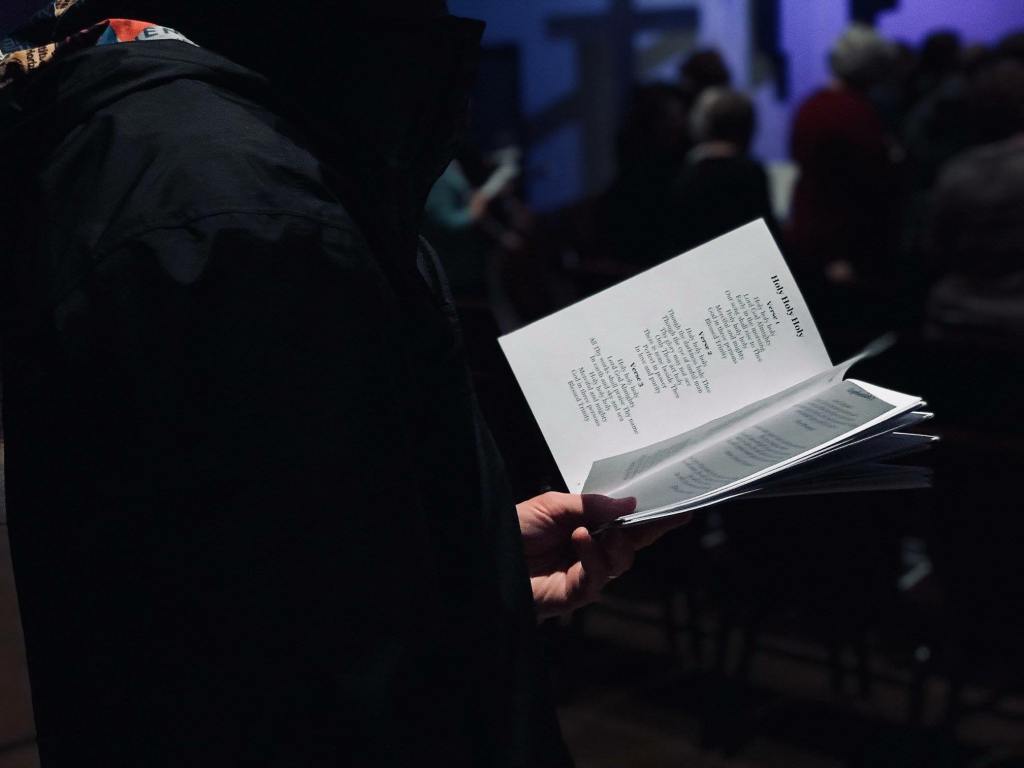
“While these texts…are not as extensive as the creeds that were written by the ancient church fathers or the confessions of the Reformation, they show that there was a basic body of belief that the people of God confessed as the truth. Based on this fact, the church fathers and Reformers expressed the truth of the Word in their contexts in order to make clear what they believed.”
Daniel Hyde
2000 Years of Creeds and Confessions
Returning to the idea of Jesus giving his church the gift of teachers we must remember that for 2,000 years these gifts have been constantly put forward by his grace. This has not always taken the forms of formal CC yet there have always been men taking large chunks of biblical truth and condensing them in sermons, devotionals, books, letters, commentaries, and when needed: creeds.
The current trend in western civilization of the 21st century has no place for ancient writings. Here is where the church needs to be different. We need to recognize and honor our commonality with men and women of the past who were united to the same Christ by the same faith (Eph. 4:4-6).
On top of that we who live in a place and time which has known very little if any persecution would do well to read the teachings found in the CC which were often written by men who were clarifying the very doctrines they were being persecuted for. They took it quite seriously.
Highlighting the Fundamentals of the Faith
The common ground of the CC is that they often address the same key issues of the Bible. There are exceptions when particulars of the faith are being articulated (i.e. Canons of Dordt). Nevertheless, most of the long lasting and helpful CC workout the particulars of the same doctrines.
It is in this point that we can be greatly helped by the CC in our study of eschatology. We can ask the CC the question: What do they have in common among each other? What topics regarding the return of Jesus and the end of time are found in most if not all of the CC? This will help us major on the majors and minor on the minors.
Guarding Against Blinders of Our Time and Culture
Hand-in-hand with being shown what the church by-in-large has thought to be foundational to the faith, we also have the opportunity to recognize the “traditions” or “blinders of our time and culture.” This is true of all doctrines as they are addressed in the CC. And that is not to say that the CC have the end all answer and are never wrong. However, they can help us be better students of the Word by reminding us of what other men and women have thought to be important throughout the centuries.
As an example let me use the topic of eschatology. In America we tend to jump to discussing the rapture, tribulation, and millennium. If a CC were made to represent the popular thought process of American Eschatology those three topics would be at the heart of it. However, is that common place throughout the age of the church and the various ethnicities which have formed it? We will see next week.
Do you believe the Bible? vs. What do you believe about the Bible?
Just this morning I was reading the parable of the Good Samaritan for my personal reading. Before Jesus tells the parable he asks a question. I have read this question before but today it jumped off the page at me:
““What is written in the Law? How do you read it?”
Luke 10:26
Jesus is not asking the teacher just to give him a Bible verse. Jesus is not asking him: “Do you believe what the Bible says?” Jesus wants to know what the man believes about what is written in scripture (“How do you read it?”) My friend, it is not enough to say, “I believe the Bible.” The Mormon and Jehovah Witness will say the same thing with all sincerity. The question is: What do you believe about the Bible?
Creeds and Confessions help us in this area. They do not form the end-all answer but I can tell someone that my belief about what the Bible teaches is reflected in the New Hampshire Confession of Faith. My presbyterian brothers may say that their beliefs are reflected in the Westminster Confession, etc
Conclusion
Although this post was longer than intended as I come to the end I feel that it was worth it for these two reasons:
- It is needed so that the next post will have a foundation to stand on.
- This post will be referenced in the future as other doctrines are explored because the CC have benefit and carry weight in other areas of biblical teaching.
Let us not quickly disregard the writings left to us by the teachers of the church whom Jesus gave to us as gifts. We have no reason to think that his presents expire so let us enjoy them until Jesus returns for his church.
Two Applications
- If Creeds and Confessions are new to you I would encourage you to go check out one or two. If you are baptist go read the New Hampshire Confession of Faith (it is short). If you are Presbyterian go start the Westminster Confession of Faith (its long). Lutherans go check out the Augsburg Confession and the Anabaptist (or those of the heritage) find a copy of the Dordtrecht Confession. If you have the time and interest I would further encourage you to check out a confession from one of the traditions above which is different from you. Finally, go read the Nicene and Athanasian Creeds. These have influenced persons of all Christian traditions (denominations).
- Thank Jesus for the gift of teachers. Who taught you about salvation and laid the foundation for the Spirit to give you new life? What Bible study leaders or Sunday School teachers has God put in your life? What pastors have taught you week after week? Thank Jesus for this gift. What books or writings have influenced your walk with Christ? Thank Jesus for those men and women who wrote down those words that have been of benefit to your soul. To go a step further, not so much as an application of Ephesians 4:11-12, but as an implication: write a thank you or two or three to those who have taught you in the faith.
 The Reforming Raker
Excellent! Looking forward to the next one!
Love you! Mamaw
On Mon, Aug 24, 2020 at 10:44 PM The Reforming Raker wrote:
> > > > > > > Pastor_M. posted: ” > What gift have you been give at Christmas or on your birthday that took > your breath away? Maybe it is a handful of gifts which stand out above the > rest. No, nothing lasts forever, but I would venture to guess that at least > one or a few of those gifts las” > > > >
LikeLike
As am I. We will delve into church history to see what has been said of resurrection and judgement.
LikeLike