
My wife Hannah loves to plant flowers around the house to brighten up the yard. One flower she is intentional to plant is the Tulip. Every spring I enjoy seeing which of her Tulips produces exactly five bulbs. Why would I look for that? Well for a little light hearted amusement as Hannah roles her eyes at my theological jokes. You might ask: What does theology have to do with Tulips?
The phrase T.U.L.I.P. is a modern tool used to concisely state what was communicated by the Synod of Dort by way of acronym in response to an opposing doctrinal view of salvation.
- Total Depravity – sin has effected and wholly tainted humanity to the root
- Unconditional Election – the object of God’s love does nothing to earn it
- Limited Atonement – Jesus died particularly for his people
- Irresistible Grace – when the Spirit calls to the human soul with power they will gladly trust
- Perseverance of the Saints – the Triune God will see his work of redemption through to the end

Brief Clarification:
QUICK NOTE to those who have a level of familiarity with the above acronym: T.U.L.I.P. as a concise doctrinal stament on salvation by use of acronym in response to an opposing view, being a modern tool of instruction, needs to be fairly treated with some explanation. To judge the five above points at face value would be to misrepresent the true concepts behind the acronym. Let us quickly consider:
- These are five concise points therefore they are not thorough on each doctrine.
- As an acronym there is a limitation to the expression of the heart of the belief system which is represented.
- The acronym concisely expresses the response given by the Synod of Dort to what is known as the Remonstrance (explained later). As a response it is narrow in its scope and not necessarily dealing with the whole of the issue, nor is it required when responding to a particular issue.
- The acronym is modern and did not originate with the Synod (1619) but came about in the early 1900’s.
Now that I have created an acronym (Concise, Acronym, Response, Modern) let me point you to one of the first free online resources I utilized when wading into these waters. Go check out C.A.R.M. ministries . They are a well rounded ministry which address…literally a myriad of questions.
The History Behind the Acronym: The Synod of Dort
Summary: The Synod of Dort was in response to the Remonstrance of the Dutch Reformed Church.
The Remonstrance challenged a variety of beliefs held by the Dutch Reformed Church. For our discussion we will note that there was a difference of understanding of God’s work of salvation within the Dutch Reformed Church at this time (late 1500’s into early 1600’s). The Remonstrance championed the theology of Jacobus Arminius while those who continued with the Dutch Reformed Church adhered to the theology of John Calvin (there the name finally surfaced. I should have played Darth Vader music before I wrote those ten letters). So yes, the Dutch Reformed Church held to the soteriology (theology of Salvation) that Calvin had championed while the Remonstrance within the Dutch Reformed Church sought a kind of reevaluating of this doctrine in accord with Arminius.
In contrast to the teaching represented by the above T.U.L.I.P. the Remonstrance presented five statements:
- Conditional Election
- Unlimited Atonement
- Total Depravity
- Prevenient Grave
- Conditional Perseverance
There is no acronym or flower named, just as the Dutch Reformed response did not utilize an acronym. The meaning of these five points will be unpacked in further blogs.
We have seen the various aspects of the disputed doctrines with regard to salvation. Now let’s look at the timeline of these events starting with Calvin’s life on through the Synod of Dort.
- John Calvin (1509-64) and Jacobus Arminius (1560-1609) were not present at the Remonstrance (1610) nor the Synod of Dort (1618-19).
- Although in Calvin’s work he addressed the divine work of predestination, that was not all he wrote. His works were far more reaching than this one area (see Institutes of the Christian Religion). Yet, his contributions were heavy influencers in the Dutch Reformed Church when it came to the doctrine of salvation. Therefore, the Remonstrance refutation against the Dutch Reformed with regard to the doctrine of salvation indirectly opposed much if not all that Calvin had taught 50+ years prior. The opposition was not to over throw the totality of the doctrine as had been upheld in years gone by, but to revise it.
- Arminius was not a heretic. Let us be clear that from what history shows Arminius was truly a brother in Christ. He had a different view of the sinfulness of man and God’s role in saving, yet not a heretic. When I attended John Piper’s conference on T.U.L.I.P. back in 2013 he said that he believed he would have been good friends with Arminius had they been contemporaries. We cannot deny the brotherhood that may be had with those who have disagreements with us, yet we also need to respectfully uphold doctrine which is God glorifying and internally consistent. Let us not think of the name of Jacobus Arminius poorly, but learn that truth must be held above unity.
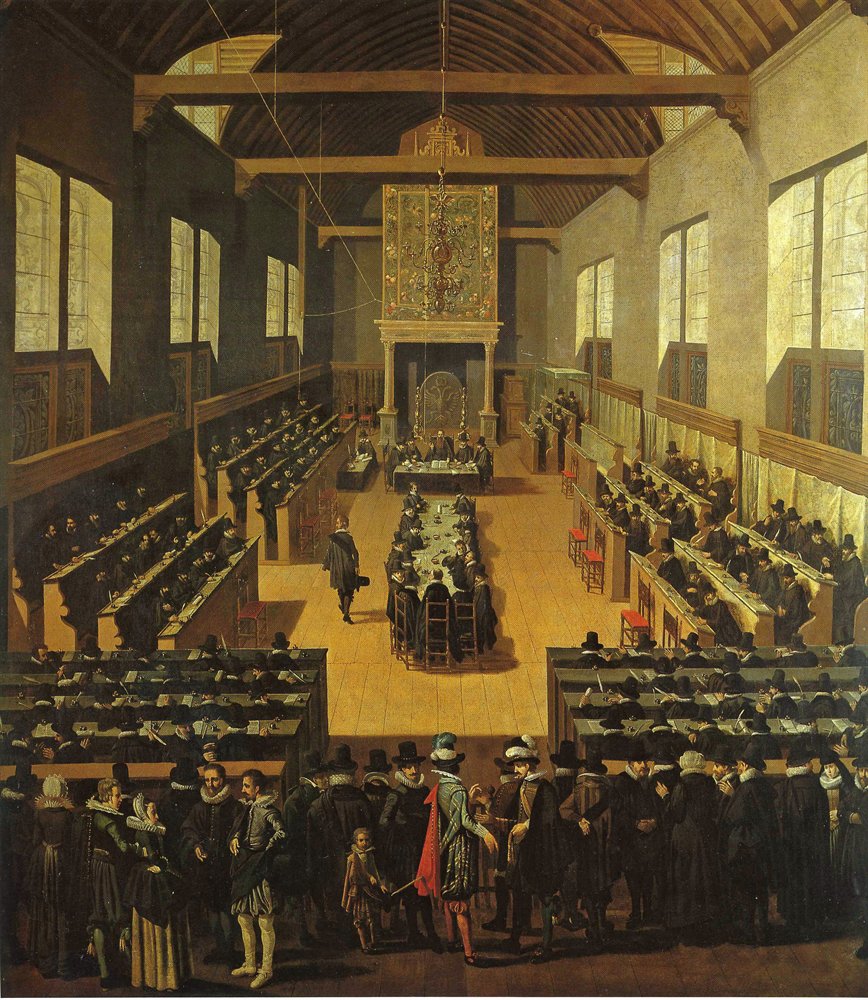
- The Synod of Dort was a gathering of pastor theologians from the continent of Europe and the British Isles in Dordrecht, Netherlands from 1618-19. Their purpose was to give answers to the objections presented by the Remonstrance. From this emerged the Canons of Dort which set forth in writing the beliefs held by the Dutch Reformed Church as a rebuttal. This hefty step may seem like over kill, however, it was not without reason. The slight changes the Remonstrance desired to teach regarding man’s sin and God’s grace were a step backward toward the Roman Catholic Church. The concerns expressed at the Synod of Dort proved to be valid. As time went on after the Remonstrance and Synod of Dort, there were men who had followed Arminius’ teaching of sin and grace who went running back to Roman theology of Salvation. The Synod of Dort took a strong stand because the slightest adjustment to truth is error, and the smallest error leads to heresy if unchecked.
Conclusion
T.U.L.I.P. is more than a creative catch phrase to put on a t-shirt. It is just scratching the surface of rich theology that was rediscovered, unpacked, and polished in the reformation and the years which closely followed. Now that we have briefly surveyed the history of where this acronym came from we will go on to discover what these five truths mean in more biblical detail. Until then:
Two Applications:
- Doctrine is Decisive: Many people have said, “Let’s stay away from doctrine because it divides.” There is no denying the effect is there, however, that is not the primary effect. The first role of doctrine is not to be divisive, but to be decisive. The study of truth, or call it doctrine, determines what you believe, and therefore guides how we are to live. Doctrine is quite practical. This does not mean you have to read books that are two inches thick (although reading at least one would be a good idea). Remember what the scriptures teach, “Love the Lord your God with all your heart and with all your soul and with all your mind.” An avenue we are to take in pursuing a love toward God is to use the mind he gave us so as to better apprehend his greatness. Doctrine leads to Devotion.
- Fellowship amid Friction: If ever the generations of this era have been reminded how sweet Christian fellowship is, it is now. COVID-19 has thrown a crazy curve ball at us that no one saw coming. It has caused me to greatly appreciate my brothers and sisters. I hope it has for you as well. Let this season stamp on our heart the blessedness of fellowship even amid friction. Yes, there were severe disagreements with Arminius’ soteriology, yet there were other grounds for rich fellowship (not speaking of the followers who later confessed a theology resembling Roman Catholic Theology). Levels of theological friction may indeed negatively impact what local church we join ourselves to, and other covenant commitments (i.e. marriage). But by in large we may have coffee, a midweek Bible study, book club, close friends, business partners, counselors, and shared mission efforts. We must not be rash in handling truth yet we can firmly hold conviction in one hand while in the other desiring fellowship with all those for whom Christ died.

 The Reforming Raker
Gods timing is so perfect. When you prepared these blogs. No one knew how important they would become
Love you!
On Mon, May 4, 2020 at 7:15 PM The Reforming Raker wrote:
> Pastor_M. posted: ” My wife Hannah loves to plant flowers around the house > to brighten up the yard. One flower she is intentional to plant is the > Tulip. Every spring I enjoy seeing which of her Tulips produces exactly > five bulbs. Why would I look for that? Well for a little” >
LikeLiked by 1 person
Thank you Mamaw. I have enjoyed writing these out.
LikeLike
Sean,
As you know, we pray for you recovery and health.
Furthermore, I wanted to let you know I have been reading your blogs… but I don’t know if there is a comment sections. If there is not then I won’t worry about it. Just thought you might be interested in feed back (all good from me).
Thanks for doing this. Your gift of teaching and love for it come out in your blog. They will be resources for me if/when discussion comes up in these areas.
Respectfully,
Zach Dieken ________________________________
LikeLike