
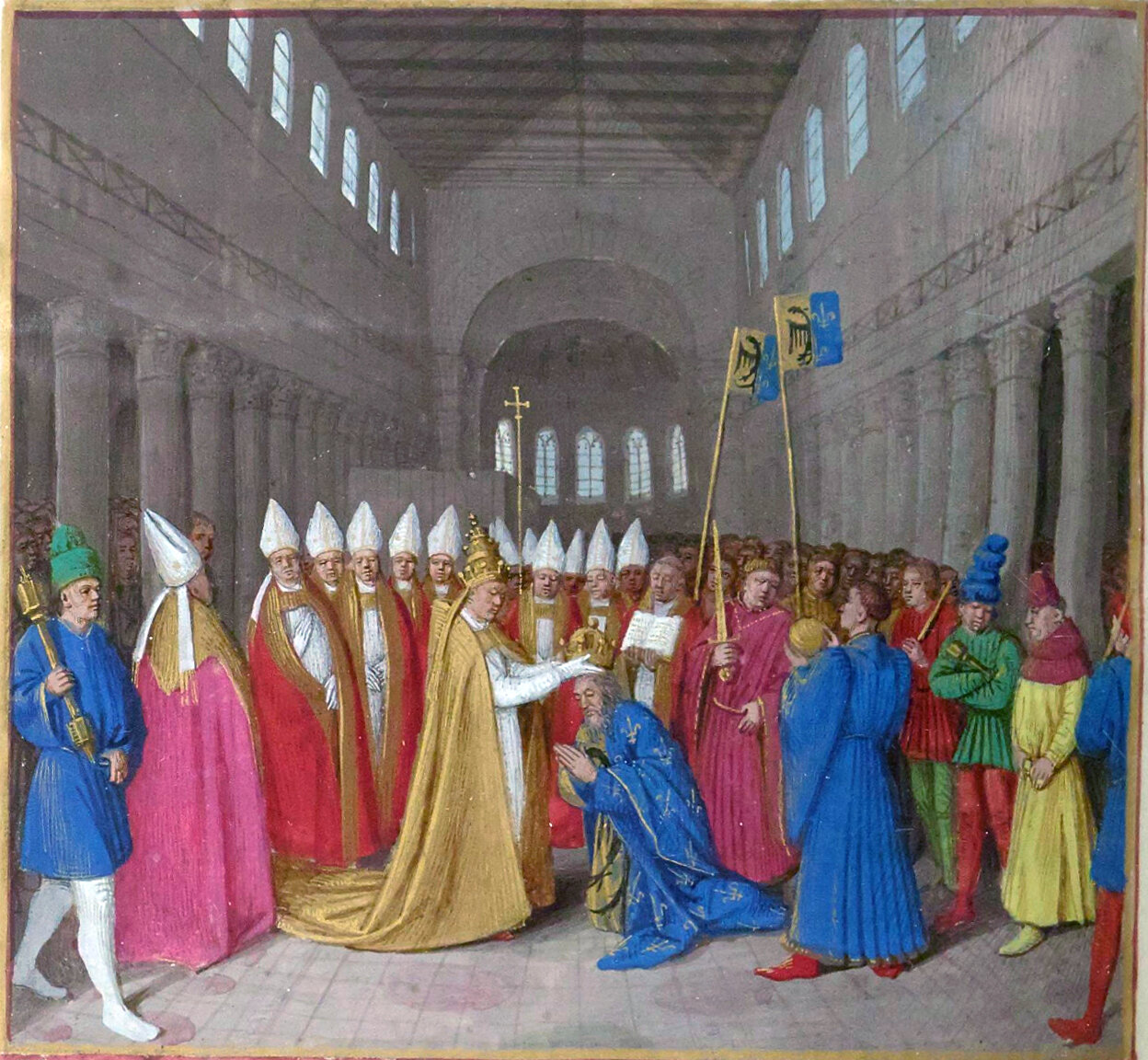
Guess what??? Today is the best day in history.
Think about it.
Each day has been a little better since the promise in Genesis 3:15, “I will put enmity between you and the woman, and between your offspring and her offspring; he shall bruise your head, and you shall bruise his heel.” Each passing week God’s people have more fully known his grace. Each year brought them closer to the day the Snake Crusher would be born. Every century since His birth has displayed the power of the gospel on this earth. Now each day that passes is one more of New Covenant grace being enjoyed by God’s people, while also being one day closer to the return of our King.
Have you ever thought about this.
I say this up front because my last two posts have been heavy…I admit it. I believe Francis Schaeffer was right regarding his understanding of where the 20th century was going. If it is true the one question we have to ask is: How Should We Then Live (be sure to check out his book…all of my children will read it before they move out).
However, in this third and final post regarding Schaeffer’s writing I wish to point out the silver lining.
Light IN the Darkness
Allow me to give a few points we can benefit from based on Schaeffer’s book. I will only give a few, each of them pertaining to the need for follower’s of Christ to be discerning.
Discernment is closely tied with wisdom. It is the careful yet practical thinking about right and wrong. It has been said that at the heart of discernment is the ability to see the different between what is right and what is almost right. I agree and will add this : it is to know the difference between what is absolutely wrong for a Christian and what is a matter of conscience. The lack of such discernment damaged the church in the centuries following the fall of Rome.
Here are a few examples from history, yet ones that we need to heed today.
1) Money

The Church had faulty theology regarding money. It misunderstood money and went from one extreme opinion to another: be poor…be communal…be rich. These opinions of did not fluctuate in such a way as to allow for others to be guided by their own conscience. Most often in the centuries following the decline of Rome various groups of churches or Christians held dogmatic views about the having and handling of money.
We know from Paul (Phil 4:12-13) and Ecclesiastes 3 that wealth and poverty are not marks of blessing or wickedness but that God gives as he sees fit:
- a time to cast away stones, and a time to gather stones together
- a time to keep, and a time to cast away.
It is not more Christian to be poor nor is it lack of God’s grace to be without. It is not unchristian to have wealth. The mark of the Christian is how he handles the things God has given to him. This calls for discernment.
We need not lack harmony as brethren because of differing views on money. For in such a circumstance the root problem is not the views on money but the lack of discernment. When Christians confused principle for precept. Where the Bible does not give specific command we must show charity to our brethren.
The Church of the middle ages did not think well on this subject and many abuses and ramifications came from it. Let us learn wisdom from scripture and discern what is a command and what is left to conscience.
2) Church and Government
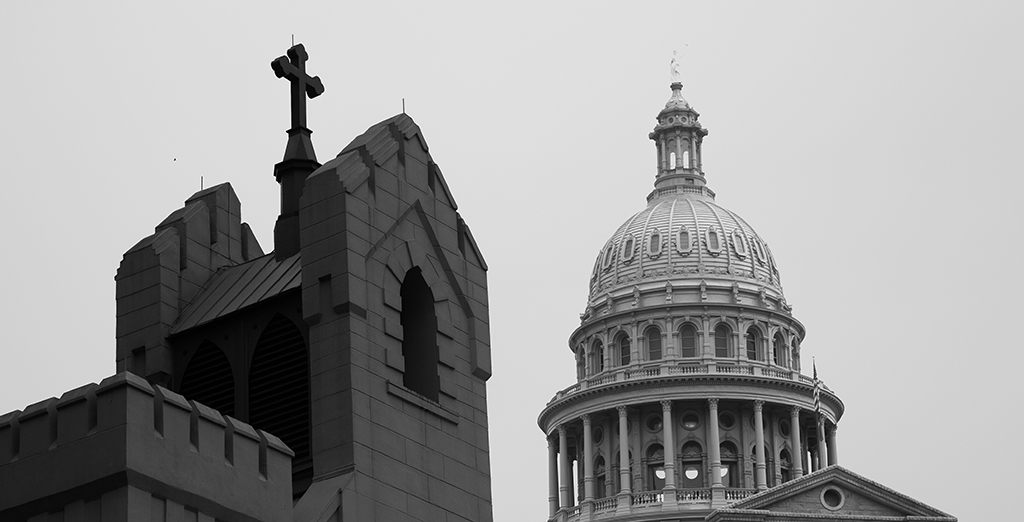
Some of the twisting of scripture regarding money came from church leaders. It was not so much bad teaching coming from pulpits as it was church leaders who began to meddle in politics, and later raised taxes for their own benefit. They were lovers of what the King James Bible calls, and I love the wording: “filthy lucre”. (definitely one of my favorite KJV phrases)
It was under Charlemagne (747-814AD) that Church and Government began to merge more formally. It had already begun, as did the filthy acquiring of wealth by so called church leaders. Yet, as magnificent as Charlemagne was, within his rule one of the most devastating moves of the Church occurred on the macro level. Charlemagne as king of France became a formal extension of the church in league with the Pope. He was The Holy Roman Emperor. The blurred and undefined distinctions of Church and State that we wrestle with today formally began then. Charlemagne as a king and church leader not only enabled various abuses of power and money, but it also put the Christian conscience in a most difficult place. The Christian began to find himself in a place that many Christians found themselves in 2020.
Yet the objection is: “In America we practice separation of church and state.”
True enough, at least we do far more than many other countries within western civilization. However, the remnants of Charlemagne’s merging the two God given entities still plagues us.
The presence of it even in America was seen in 2020 with believers stating with boldness and clarity: “If the government tells the Christian ‘You can’t meet’, then we must obey.” There were so many churches and Christians allowing the state to speak to them as God. Thus, we still have much to do in reforming our views of Church and State.
Therefore, in our day you need to know what the Bible says about Church and Government. Their roles and distinction. The Church can be a mighty help yet it must not morph into the State. That was a disservice from the Middle Ages unto Western Civilization that we still feel today. (Here is a podcast on this topic from Theologic…side note I also host a podcast with two friends).
3) Books and Writings
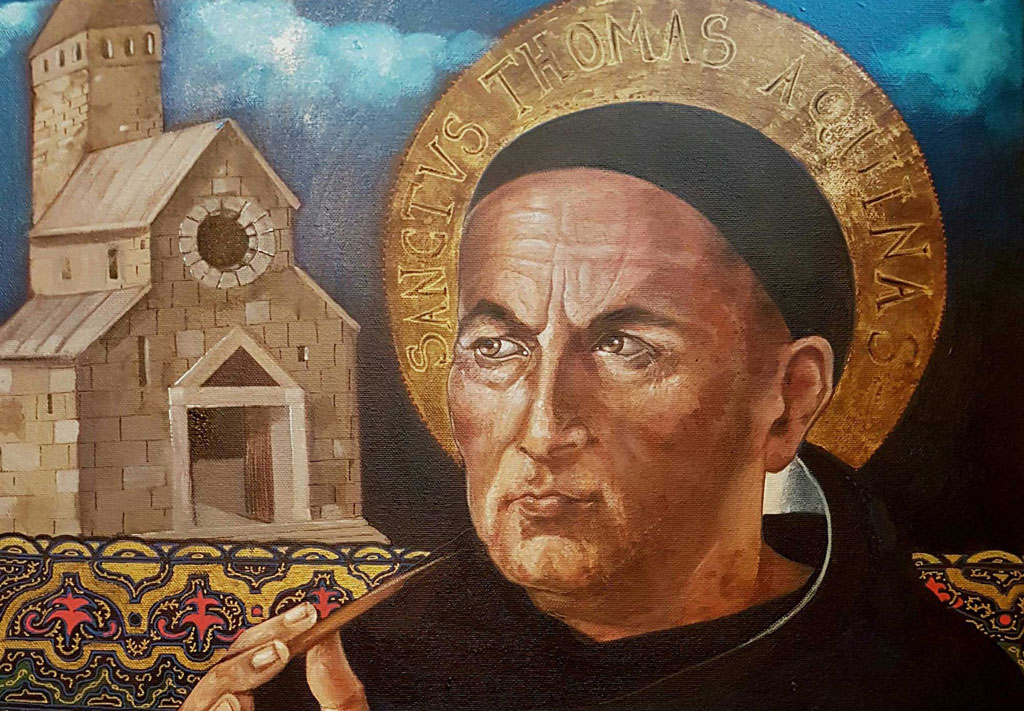
Reading secular works is not bad and can be beneficial if used well, yet to use them as a means to understand the scriptures is dangerous. As the middle ages tapered off a Dominican Friar by the name of Thomas Aquinas (1225-74) had a wide and deep impact on the Church, one that continues to this day. Both the present Roman Catholics and Protestants reference his writings.
Unfortunately, he was heavily influenced by Plato and Aristotle, Greek philosophers. In his writings he made a move similar to Charlemagne. Instead of merging the authority of the Church with the State, Aquinas merged theology with Greek philosophy. This had unfortunate consequences, one of which was the stage being set for the Renaissance (on Renaissance see previous two blog posts).
This is not to say that a Christian nor pastor can ever read philosophy or other writings besides devotionals or theology. However, we must handle them with care, with discernment. Like the discussion on money above, having money or a book on Greek philosophy is not evil. The question is: how is it being used. Are both your money and possessions, as well information you take in from a book or instagram, being utilized wisely as prescribed in scripture, namely Psalms and Proverbs?
Conclusion
A practical light in a dark time is a Bible well known and applied.
In dark times the Church must unify by showing deference and patience where Christians differ on matters of conscience, and by being wholistic when thinking about different views. Knowing the Bible so as to have balanced theology is a source of light in difficult times.
Be in God’s word enlivened and illuminated by it. As the moon is bright only as it has direct view of the sun, so the child of God shines the best light around him when his eyes are regularly set on the Son. Look to Christ who is the embodiment of divine wisdom, and he will light your path that you may walk in discernment.
 The Reforming Raker
Hallelujah for God’s amazing light into our lives! May we be blessed with wisdom that can only come from our Lord!
LikeLike