

I grew up in the deep south (Mississippi [I try to pronounce all four S’s but its still a challenge], Georgia [not George, IA where I currently live], and Florida [the panhandle that is]). So you get the picture…the south is in my cultural veins. I grew up as a pastors kid…my Dad is an ordained Southern Baptist Minister. The church culture of my childhood dominated by the deep south Southern Baptists. Have you ever heard the joke that goes something like this:
“A non-baptist dies and goes to heaven. As he is lead into heaven by an angel he is asked to be quiet. He asks why. The angel replies, ‘We don’t like to upset the baptists by allowing them to know that other denominations made it in.'”
Anonymous
A joke right…I missed the joke part growing up. As a kid I thought we, the holy of holy Southern Baptists, were gonna be it at the pearly gates. With that culture that I was raised in (No reflection on my dad as a minister. He is one of the most patient and gentle souls I know.), but in that culture that had much imbalance doctrinal distinctive also at times got out of balance.
Beliefs abut Baptism
Baptism was one of those doctrines on two fronts:
- It was a doctrine as important as the doctrine of the Trinity, Justification by Faith, and the Inspiration of the Scriptures. Those Presbyterians were just all confused and did not know who to baptize.
- The other imbalance regarding baptism was the view that it merely represented what Jesus had already done in one’s heart. This is historically a pendulum swing stemming back to the reformation where protestants wanted to distance from Rome to an unhealthy extreme. Sometimes I’m surprised we didn’t ditch the doctrine of the Trinity since Rome also affirms it lol…kinda kidding…kinda not.

I believe that baptists need to reevaluate their practical beliefs about baptism. I have sat in far too many baptism services where the pastor says repeatedly and with emphasis that this baptism is simply an outward example of an inward reality. I wish to humbly challenge that.
Hang with me here. I’m not leading us back to some vaguely Roman Catholic view…and yes, the title to this blog was “click bait”…but if you have read this far…it worked. And thank you for continuing on. I simply want us to investigate one question…
Did the apostles teach that baptism was simply an outward sign of an inward reality?
How did Paul, Peter, and Luke think about baptism? Do their sermons and writings reflect baptism as a mere sign?
Let me say up front that I do not anticipate providing conviction-altering conclusions, ones which will entirely reshape your belief. This is a topic I have only wrestled with for a few years now. I hope in this post to present some healthy approaches to our consideration of baptism. I want to lead us through helpful questions and considerations that might help to hone your belief regarding baptism. (This post will be divided in two parts)
In our consideration of baptism I want us to look at the teaching of: The Old and New Testament, the doctrine of circumcision, and the words of Peter.
Old and New Testament
What is the first verse that comes to mind when you think about baptism? What part of the Bible might you go to if you needed to explain baptism to a new believer?
Jesus’ baptism story?
Paul talking about being raised to walk in newness of life in Romans 6:1-4?
Peter’s command to the men on the day of Pentecost: “Repent and be baptized every one of you in the name of Jesus Christ for the forgiveness of your sins, and you will receive the gift of the Holy Spirit.” (Acts 2:38)?…the blog title comes from this verse, Acts 22:16 and 1 Peter 3:21.
Maybe you thought of one of these or another verse or one of these along with another verse. These are such important stories and writings for how we understand baptism. However, I also hope that we consider teaching from the Old Testament. All of scripture is profitable for teaching. The Old and New Testament must both be allowed to inform our thinking about baptism.
I will put in a word of commendation to you regarding our Presbyterian and Reformed brethren. They have very strong arguments for their belief about baptism, and one of the reasons is that they go to both Testaments to teach on the doctrine. As far as quantity of scripture with in their arguments is concerned they have generally been out preforming the Baptists over the last century.
There was a day (one that I will discuss at another time) when Baptists taught on baptism from more than just the New Testament. Do a Google search for baptism and John Bunyan or Nehemiah Coxe or Hercules Collins or Benjamin Keach).
I’ll discuss more in the next post about the nitty gritty of looking at both Testaments. For now I want us to see that its more than noticing how the Baptists did it in the past and the Presbyterians continue to do it. I want us to see that the apostles utilized the Old Testament to teach on baptism.
Exodus 14
When Paul speaks to the Corinthians of Baptism and the Lord’s Supper he references Exodus in general and also specifically from Exodus 14:1-31. Paul wrote:
For I do not want you to be unaware, brothers, that our fathers were all under the cloud, and all passed through the sea, and all were baptized into Moses in the cloud and in the sea, and all ate the same spiritual food, and all drank the same spiritual drink. For they drank from the spiritual Rock that followed them, and the Rock was Christ.
1 Corinthians 10:1-4
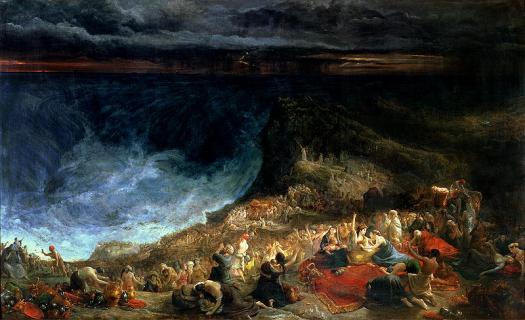
What we find here is Paul speaking about the two ordinances Christ has given the church: Baptism and the Lord’s Supper. He is explaining that what we have now in those two ordinances was prefigured or previously exemplified in the stories of Exodus.
I do not intend to walk through the details of these verses but to point out that Paul’s understanding of the Supper (“ate…spiritual food”) and Baptism (“passed through the sea”) was rooted in the Old Testament.
Genesis 6
Peter is all the more direct and clear regarding his apostolic teaching on baptism being connected to the Old Testament. He writes:
For Christ also suffered once for sins…being put to death in the flesh but made alive in the spirit, in which he went and proclaimed to the spirits in prison, because they formerly did not obey, when God’s patience waited in the days of Noah, while the ark was being prepared, in which a few, that is, eight persons, were brought safely through water. Baptism, which corresponds to this, now saves you…”
1 Peter 3:18-21
Martin Luther stated that this passage is one of the most difficult texts in the New Testament to understand: proclamation to spirits in prison, former disobedience, and baptism tied to salvation (more on that last part next week).
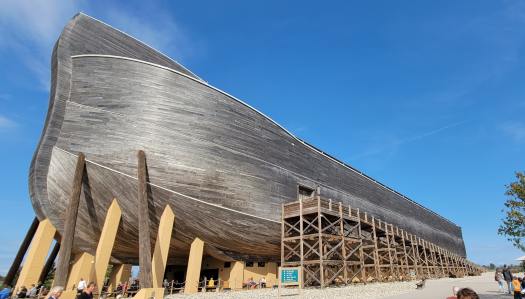
However, what is abundantly clear is that Peter is teaching on baptism while using the story of Noah to exemplify what baptism is. Peter is utilizing Old Testament theology to explain baptism to the church.
If Paul and Peter look to the Old Testament to teach on baptism maybe we ought to look there as well for a fuller understanding of this doctrine. No matter the truth we are examining in scripture it is always helpful to not only look at what Paul or Peter said, but also how they use the Old Testament to ground their teaching.
Conclusion
Next week I want to go back to the beginning and look at how the first two verses of scripture inform our belief about baptism. For now I hope you will reflect on what we have seen here. Go read from 1 Corinthians 10 or 1 Peter 3. Maybe look up a sermon by a favorite pastor on one of these texts.
Be sure to check back next week for a fuller explanation of the title “Repentance + Baptism = Forgiveness”.
 The Reforming Raker
Looking forward to the next one!
Mamaw
On Sat, May 21, 2022 at 9:53 AM The Reforming Raker wrote:
> [image: Site logo image] Pastor_M. posted: ” I grew up in the deep south > (Mississippi [I try to pronounce all four S’s but its still a challenge], > Georgia [not George, IA where I currently live], and Florida [the panhandle > that is]). So you get the picture…the south is in my cultural veins. I > gre” The Reforming Raker Repentance + > Baptism = Forgiven > > > Pastor_M. > > May 21 > > I grew up in the deep south (Mississippi [I try to pronounce all four S’s > but its still a challenge], Georgia [not George, IA where I currently > live], and Florida [the panhandle that is]). So you get the picture…the > south is in my cultural veins. I grew up as a pastors kid…my Dad is an > ordained Southern Baptist Minister. The church culture of my childhood > dominated by the deep south Southern Baptists. Have you ever heard the joke > that goes something like this: > > “A non-baptist dies and goes to heaven. As he is lead into heaven by an > angel he is asked to be quiet. He asks why. The angel replies, ‘We don’t > like to upset the baptists by allowing them to know that other > denominations made it in.'” > > Anonymous > > A joke right…I missed the joke part growing up. As a kid I thought we, > the holy of holy Southern Baptists, were gonna be it at the pearly gates. > With that culture that I was raised in (No reflection on my dad as a > minister. He is one of the most patient and gentle souls I know.), but in > that culture that had much imbalance doctrinal distinctive also at times > got out of balance. > Beliefs abut Baptism > > Baptism was one of those doctrines on two fronts: > > 1. It was a doctrine as important as the doctrine of the Trinity, > Justification by Faith, and the Inspiration of the Scriptures. Those > Presbyterians were just all confused and did not know who to baptize. > 2. The other imbalance regarding baptism was the view that it merely > represented what Jesus had already done in one’s heart. This is *historically > a pendulum swing stemming back to the reformation* where protestants > wanted to distance from Rome to an unhealthy extreme. Sometimes I’m > surprised we didn’t ditch the doctrine of the Trinity since Rome also > affirms it lol…kinda kidding…kinda not. > > Photo by kaleb tapp > > on Unsplash > > > I believe that baptists need to reevaluate there practical beliefs about > baptism. I have sat in far too many baptism services where the pastor says > repeatedly and with emphasis that *this baptism is simply an outward > example of an inward reality*. I wish to humbly challenge that. > > Hang with me here. I’m not leading us back to some vaguely Roman Catholic > view…and yes, the title to this blog was “click bait”…but if you have > read this far…it worked. And thank you for continuing on. I simply want > us to investigate one question… > Did the apostles teach that baptism was simply an outward sign of an > inward reality? > > How did Paul, Peter, and Luke think about baptism? Do their sermons and > writings reflect baptism as a mere sign? > > Let me say up front that I do not anticipate providing conviction-altering > conclusions, ones which will entirely reshape your belief. This is a topic > I have only wrestled with for a few years now. I hope in this post to > present some healthy approaches to our consideration of baptism. *I want > to lead us through helpful questions and considerations that might help to > hone your belief regarding baptism*. (This post will be divided in two > parts) > > In our consideration of baptism I want us to look at the teaching of: The > Old and New Testament, the doctrine of circumcision, and the words of > Peter. > Old and New Testament > > What is the first verse that comes to mind when you think about baptism? > What part of the Bible might you go to if you needed to explain baptism to > a new believer? > > Jesus’ baptism story? > > Paul talking about being raised to walk in newness of life in Romans > 6:1-4? > > Peter’s command to the men on the day of Pentecost: “*Repent and be > baptized every one of you in the name of Jesus Christ for the forgiveness > of your sins*, and you will receive the gift of the Holy Spirit.” (Acts > 2:38)?…the blog title comes from this verse, Acts 22:16 and 1 Peter 3:21. > > Maybe you thought of one of these or another verse or one of these along > with another verse. These are such important stories and writings for how > we understand baptism. However, I also hope that we consider teaching from > the Old Testament. All of scripture is profitable for teaching. *The Old > and New Testament must both be allowed to inform our thinking about baptism* > . > > I will put in a word of commendation to you regarding our Presbyterian and > Reformed brethren. They have very strong arguments for their belief about > baptism, and one of the reasons is that *they go to both Testaments to > teach on the doctrine. As far as quantity of scripture with in their > arguments is concerned they have generally been out preforming the Baptists > over the last century*. > > There was a day (one that I will discuss at another time) when Baptists > taught on baptism from more than just the New Testament. Do a Google search > for baptism and John Bunyan or Nehemiah Coxe or Hercules Collins or > Benjamin Keach). > > I’ll discuss more in the next post about the nitty gritty of looking at > both Testaments. For now I want us to see that its more than noticing how > the Baptists did it in the past and the Presbyterians continue to do it. *I > want us to see that the apostles utilized the Old Testament to teach on > baptism*. > Exodus 14 > > When Paul speaks to the Corinthians of Baptism and the Lord’s Supper he > references Exodus in general and also specifically from Exodus 14:1-31. > Paul wrote: > > For I do not want you to be unaware, brothers, that our fathers were all > under the cloud, and *all passed through the sea*, and *all were baptized > into Moses* in the *cloud and in the sea*, and all ate the *same > spiritual food*, and all drank the same *spiritual drink*. For they drank > from the spiritual Rock that followed them, and the Rock was Christ. > > 1 Corinthians 10:1-4 > > What we find here is Paul speaking about the two ordinances Christ has > given the church: Baptism and the Lord’s Supper. He is explaining that *what > we have now in those two ordinances was prefigured or previously > exemplified in the stories of Exodus*. > > I do not intend to walk through the details of these verses but to point > out that Paul’s understanding of the Supper (“ate…spiritual food”) and > Baptism (“passed through the sea”) was rooted in the Old Testament. > Genesis 6 > > Peter is all the more direct and clear regarding his apostolic teaching
LikeLike
Thank you
LikeLike