
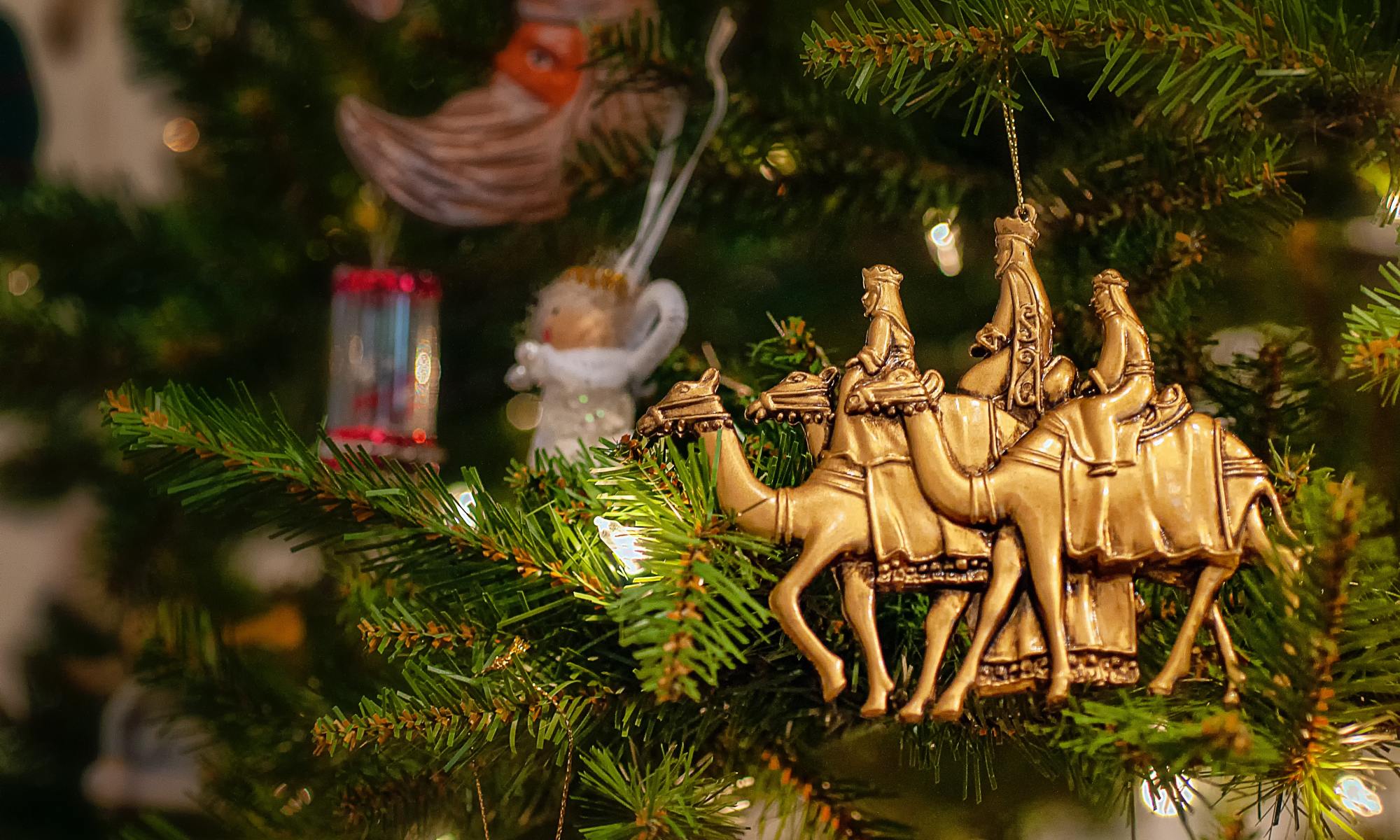
You might have guessed from the title that this post will be reminiscent of Christmas. With that said let me put forward a commonly asked question: Were the “Wise Men” at the stable the night Jesus was born or did they visit months later? Maybe you have heard this question. But is it the right question? Is there a more important question? The value of what we take away from a passage often pends on what questions we are asking about the passage. I would propose that we should not be so much asking when were they there but why were they there? It is not an bad question to enquire “when” they were there, but its not the best question. The better question is: Why did Matthew include this story which none of the other gospel writers mention?

Brief Introduction
In various forms this question has been on my mind now for a few months. I decided to take the Christmas season as a time to explore it. A few things came up in miscellaneous reads and Bible studies throughout the year which pressed me to dig deeper. Back on December 13 I began preaching in Matthew 1 then finally on December 27 I preached on the text we will look at today: Matthew 2:1-12.
I am writing this post for two reasons: 1) The answer to the above question falls right in line with what we have looked at in recent weeks as pertains to the Kingdom of God as seen in Mark; and 2) Due to time and circumstance I did not share all that I learned regarding this passage in my sermon back on the 27th. I hope that what is put forward here will enrich your love of the birth of Christ and the events that surrounded it.
Why is Matthew 2:1-12 in the Bible?
Let’s back up a chapter which is convenient since that takes us to the beginning of not only the book but the New Testament. These next several points will take ups good chunk of the post. In this case looking at what leads up to the text may be likened to this famous quote:
“Give me six hours to chop down a tree and I will spend the first four sharpening the axe.”
Abraham Lincoln
Although it won’t take four hours to write or read, I will still give the first portion of this explanation to “sharpening” our understanding of the context.

- As we look at the New Testament’s beginnings in Matthew we must remember that this book was written to a heavily Jewish audience. So What? So…they would have had a great familiarity with the Old Testament, at least greater than most of us today, because they heard it week after week in the synagogue. Therefore, there are details and concepts that the Jewish audience would have picked up on very naturally, where as you and I have to do some review.
- The first appeal Matthew makes to his Jewish audience is a seemingly poor start to his book: a list of names. What is that for an attention grabber? Let’s be honest…on a usual day we skip it because we read it last year…on a really good day we half-heartedly skim over the names to “do diligence”. But let us remember that ALL scripture is breathed out by God, and is profitable. Matthew puts forward this genealogy (name list) with intention. In short, it strongly ties the New Testament to the Old Testament: 1) To state the obvious, the genealogy in someways sums up much of the Old Testament by naming key figures. 2) Within that summery Matthew’s great goal is to show the relation between Jesus and king David. The first few chapters of Matthew involves an unpacking of how Jesus is the promised heir to the throne of David. So the genealogy proves very helpful. 3) To the Jew this genealogy would indicate the potential of a new beginning (aka redemption). In the Old Testament genealogies often tied into a new stage of God’s work to redeem (Gen. 5 precedes the new beginning with Noah and the flood; Gen. 11 comes before God calls Abraham; and 1 Chr. 1-3 (in the Hebrew OT) comes at the end of the Old Testament, preparing for the coming of Jesus). Matthew’s genealogy relies heavily on 1 Chr. 1-3 so as to show continuity with it. It shares the common purpose, although each one has its own unique facets, of telling the people of God that a new time is dawning.
- Matthew goes from the big picture of king David’s family (1:1-17) to focusing the microscope to one specific son of David: Joseph (1:18-25). The story surrounding Joseph in at least two ways continues the theme of David’s kingly family: 1) Joseph is explicitly referred to as a “son of David”; and 2) The prophecy put forward by Matthew is from Isaiah 7:13-14 which was a prophecy specifically spoken to “the house of David.” Therefore, here in Matthew 1 we have a messenger sent to someone of the house of David which leads to the reminder of the ancient message given by the Lord to the House of David.
- So What? Matthew is going to great lengths to make it abundantly clear that Jesus of Nazareth is the promised Son of David who would sit eternally on the throne (2 Samuel 7). This was so important for Matthew to do for the Jews. Many who would have been the first readers of his gospel may have either heard Jesus himself or spoken with those who had: Jesus was a very familiar character. May be the people were too familiar with him. Don’t we all, especially at Christmas, fall into this trap. We have read Luke 2 & Isaiah 9; we’ve sang ‘Joy to the World’ & ‘Hark! The Herald Angels Sing’ so many times that we think we know them. But do we? Do we know these things or are we just excessively familiar with them? The same was true of many who lived at the time of Jesus. They needed the Gospel of Matthew to open their eyes to who this Jesus of Nazareth really was. Through these scriptures God makes all the more clear who Jesus is, with details that no one would have known apart from God communicating them to us.
Matthew 2:1-12 in Light of Chapter One
Enter Wisemen.
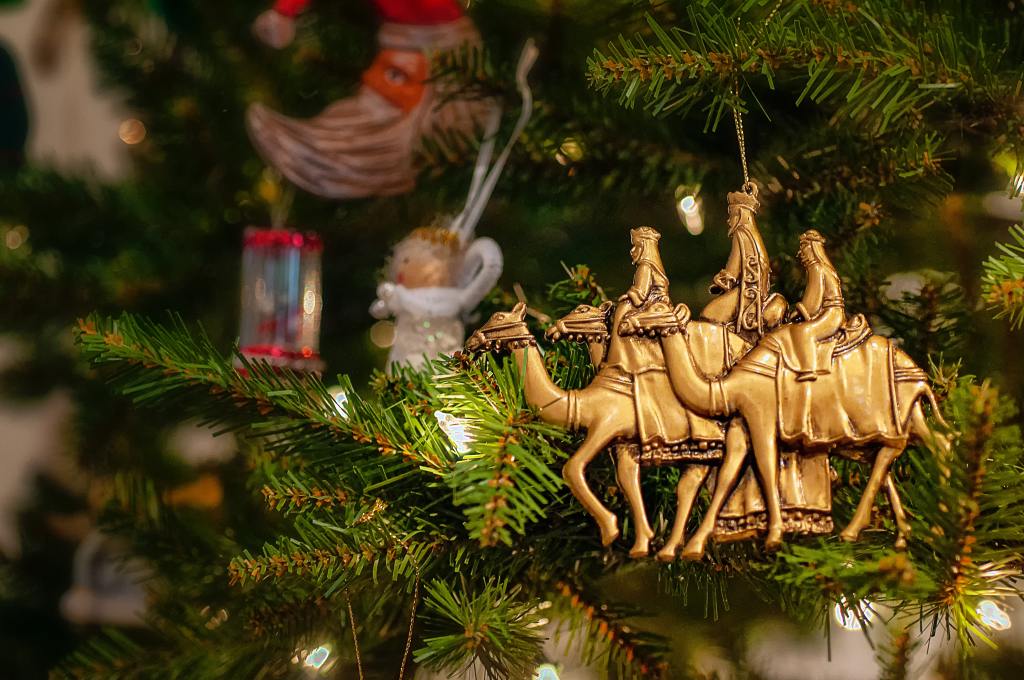
In some ways this story is peculiar. It is not mentioned in the other gospels, and it might almost seem unnecessary to the story of Jesus? What does it add? Why didn’t Matthew cut it in the final edit?
Well lets explore those questions.
If we were to jump out of chapter two and quickly glance at the whole book we would see: 1) It begins with Jesus being born into the Jewish kingly line so as to be the promised king for the Jews; yet 2) If we looked to the end we would see a world vide emphasis spanning all people groups in what we commonly call “The Great Commission” (Matt. 28:18-20). By the end of the book we see clearly that Jesus came for all tribes, peoples, and languages. However, that is not explicitly clear in the opening chapters. But just because it is not abundantly clear does not mean it is not vaguely hinted at.
Matthew continues to display that Jesus is the promised king of David’s family while also beginning to show that he is for more than just the Jews (2 Sam. 7; Isa. 60; Psa. 72). Consider the following:
- Jesus is named King of the Jews in contrast to the king over the Jews. The word ‘king’ appears four times in these twelve verses. If that is not enough to grab our attention don’t forget that it follows chapter one where Matthew introduces Jesus as king by way of genealogy (1:1-17) and narrative (1:18-25). Therefore, kingship is a central part of this unit of Matthew (Matt. 1-4). In 2:1-12 Matthew puts Jesus forward as the rightful king of the Jewish people by contrasting him with the wrongful king over the Jews. Herod was not a Jew. He was an Idumaean (Edomite…a descendent of Esau and not Jacob…See Allen Ross). He was given the kingship in Jerusalem by Rome, not Israel. The Jewish people never recognized him as their king…after all he was not of David’s family. They obeyed out of fear of Rome. Therefore, when eh wisemen show up looking for “him who is born king of the Jews” Herod is greatly disturbed. Here is the announcement of one being born of the Jews, and born to be king. We could go on into great detail as to Herod’s fear and Jesus’ future, however, it suffices for this post to note how Matthew shows the rightful king of the Jewish people by contrasting him with the wrongful king over the Jews, Herod.
- Jesus is worshipped by government officials of the east. So what? So these men cam from the east; what does it matter? Let us explore that question with the hope of enriching our adoration of this text.

- 1) This passage in the broader scope of Matthew is yet another clue that Jesus came for all peoples and nations, not only the Jews. This idea was first hinted at by the inclusion of Gentiles in Jesus’ genealogy. However, it will be overtly clear when the reader arrives in Matthew 28 in which Jesus sends his disciples to the nations to make disciples. Yet, even here in 2:1-12 that idea continues to slowly surface. This is seen in the detail of government officials of the east seeking him so that they might worship.
- 2) As we read Mark we must remember that he is writing primarily to an audience that would have been quite familiar with the Old Testament. In light of what has come before regarding Jesus as the promised king to come from David’s line, this detail about government officials coming from the east would lead their minds to passages like Psalm 72 or Isaiah 60. These texts speak of what would occur in the future when the promised king arrived. Let us give attention for a moment specifically to Isaiah 60:4-7.
Lift up your eyes all around, and see;
they all gather together, they come to you;
your sons shall come from afar,
and your daughters shall be carried on the hip.
Then you shall see and be radiant;
your heart shall thrill and exult,
because the abundance of the sea shall be turned to you,
the wealth of the nations shall come to you.
A multitude of camels shall cover you,
the young camels of Midian and Ephah;
all those from Sheba shall come.
They shall bring gold and frankincense,
and shall bring good news, the praises of the LORD.
All the flocks of Kedar shall be gathered to you;
the rams of Nebaioth shall minister to you;
they shall come up with acceptance on my altar,
and I will beautify my beautiful house.
Isaiah 60:4-7
A few points should be made from this text as pertains to Matthew 2:1-12. What is overtly clear is the reference to “gold and frankincense” (Matt. 2:11). These are the gifts that would come to the promised king as foretold by the prophet Isaiah. With that is the “good news” brought by these gift bearers (Matt. 2:2). Finally, where do these gifts and news come from? The east. All of the nations or regions highlighted above in Isaiah 60 are east of Israel. The picture Isaiah gives to us which Matthew points to is that of the nations of the east drawing near to worship the king of David’s line.
Summery and Conclusion
Matthew displays Jesus as the rightful King by contrast to the wrongful king, and that The King came for both the Jews and the nations. Therefore, Matthew brings his readers attention to the detail of the wisemen to show that the promises of God as seen in Isaiah 60 have begun in the birth of Jesus of Nazareth.
Two Applications
At the dawn of the 2021 let us consider two things regarding Jesus of Nazareth.
- May we give our mind to considering the scriptures so as to see the value and importance of Jesus. The characters we commonly refer to as wisemen were kings’ advisers. In the world of government these men were respected which is why Herod heard them out. These men of renown travelled a great distance to see this child, and honor and worship him. Important men journeyed to see the most Important Man. Respected leaders bowed with reverence for the King of kings. Make 2021 a year where you ask: Is Jesus important, valued, and respected in how I think of him? As you read your Bible (Genesis…Joshua…Isaiah..Psalms…Matthew…Romans…or Revelation) ask yourself: What does this passage show me of the worthiness and majesty of Jesus. Inform your mind and pray for the Spirit to effect your heart by the written word, so that wherever you go and whatever you do it is done to the glory of God.
- This passage before us also includes a prophecy which shows us the care given us by Jesus. Matthew 2:6 is a quotation from Micah 5 in which the one born would shepherd the people of God. Jesus is the Shepherd-King. He brings us to green pastures for rest, and leads us beside still waters for refreshment. It is Jesus who restores our soul. Give time, regular time, out of your day to fellowship with this Shepherd by reading his perfect word as preserved in your Bible. Pick it up. Read it as the word of your heavenly father to you. Pray for refreshment so that He is your strength for today. The Lord is your shepherd you shall not want.
 The Reforming Raker
Really good. Blessed my heart to know you’re our grandson. Love you
On Wed, Jan 6, 2021 at 11:31 AM The Reforming Raker wrote:
> Pastor_M. posted: ” You might have guessed from the title that this post > will be reminiscent of Christmas. With that said let me put forward a > commonly asked question: Were the “Wise Men” at the stable the night Jesus > was born or did they visit months later? Maybe you have” >
LikeLiked by 1 person