
Ok…so yes that title was used as ‘click bait’. I come clean. Yet it is more than that. If it did in fact operate as click bait that was in part because it is one of the most popular questions Christians ask with regard to the Bible and “End Times Theology”. However, I have another reason for posing and discussing the question. If I wait to flesh out the answer to that question until later much of what I write will have no foundation and may even be incoherent.
The Common Question Among Christians
This question about the times we find ourselves in are often stirred up by recent events. I remember shortly after “September 11” people asking and writing about Osama Bin Laden being the Anti-Christ. Such times also spark statements such as: “Jesus must be coming soon.”
Nearly 20 years have elapsed since that fateful day in 2001. Many events around the world have pressed people to consider if they are in fact living in the “last days.” Even the here and now of 2020 has made for much discussion. To some it has been a global PANdemic for others it is PLANdemic by the government. There has been economic fallout. We see international tensions. All of this has people talking about the times we live in, and some Christians wonder if these are the last days.
I am not a prophet nor the son of a prophet (Amos 7:14) but I will step out there and say we are in the last days of which the Old and New Testament scriptures speak of. The Apostle Peter told me…yep. And I bet he has told you also. Ok ok, I do not talk to dead guys but in reality while Peter was living he made a profound statement by the Holy Spirit in one of the most popular stories in the New Testament. Can you guess where this is going…?
Acts 2 as Divine Commentary on Joel 2
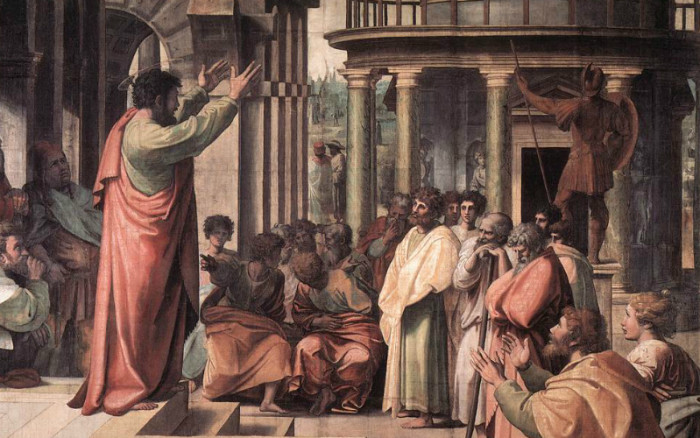
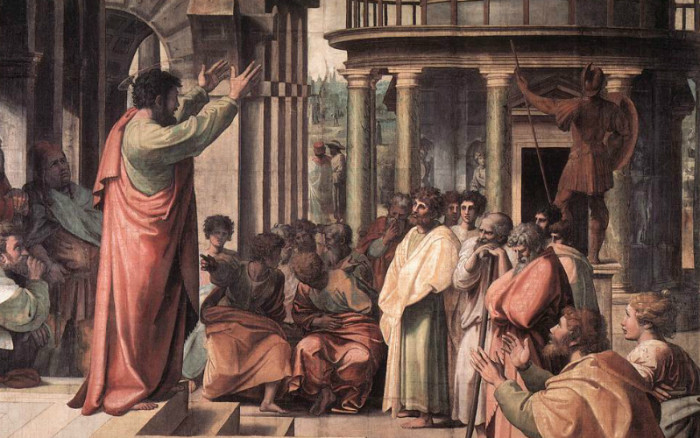
Luke tells us that it was another Pentecost like any other. The people of Israel were gathered from “from every nation under heaven.” Then the day became unlike any before it when the Spirit of God was “poured out” on mankind. The devout Jews became aware of this when the apostles and possibly the rest of the 120 members of the church began to speak in languages which were recognized by the people who had come “from every nation under heaven.” They guessed that these people were drunk, but they guess wrong. It is then that Peter, filled with the Holy Spirit, explains to them that “this” is the fulfillment of Joel 2.
Joel 2:28-32 speaks of a time when God will work in a way that is now being seen in Acts 2. Peter as an apostle declares that the fulfillment has come, therefore the latter days had arrived. In a moment I want to point out a few other places in the New Testament which also tell of how the “last days” began even in the time of the early church. First however I want to take this opportunity to show how the New Testament will serve as a key in weeks to come for unveiling the Old Testament promises.
Let us compare the Joel 2:28 with Acts 2:17
- Joel 2:28, “And it shall come to pass afterward, that I will pour out my Spirit on all flesh…”
- Acts 2:17, “And in the last days it shall be, God declares, that I will pour out my Spirit on all flesh…”
Did Peter not know his Old Testament? Why does he quote Joel yet misquote him? We have two reasons:
- The way quotes were handled in the Ancient Near East differed from how we usually interact with them. The expectation for quotation marks, exact wording, and a nicely formatted bibliography were not necessary. Peter’s quote in his time and place would not have raised any eyebrows, therefore we should not be shocked either.
- There is a purpose for New Testament to make clear what was vague in the Old Testament. It is in the New Testament that we learn who is the Seed of Abraham, Lion of Judah, and Son of David. Many examples could be given of clarification provided by the New Testament. So here there is clarification of time. Joel 2 is vague yet Acts 2:17, along with its context, gives us clarification of the timing of the prophesied events. From the narrative we see that the time spoken of in Joel was then, and since Jesus has not yet returned and the age (time period) is the same (Matt. 28:20) we may be sure that we continue in the last days.
“The citation of the prophecy has the effect of showing that what is happening is a fulfillment of prophecy and of explaining its character in the light of this divinely inspired commentary.”
I. Howard Marshall
Let us also quickly note what Peter says elsewhere along with John and the author of Hebrews:
- 1 Peter 1:20-21, “He was foreknown before the foundation of the world but was made manifest in the last times for the sake of you who through him are believers in God, who raised him from the dead and gave him glory, so that your faith and hope are in God.
- Hebrews 1:1-2, “Long ago, at many times and in many ways, God spoke to our fathers by the prophets, but in these last days he has spoken to us by his Son…”
- 1 John 2:18, “Children, it is the last hour…”
Notice that Peter is able to refer to an event within the “last times” in the past tense. As Peter is writing time has already elapsed which he understands to be contained within the last times. Then in Hebrews we read of the “last days” being spoken of in the present, a present that continues on to this very day (Matt. 28:20). Finally, John could not be more forward: “it is the last hour…”
When we consider the questions of the time we live in and whether or not they are the “last days” we have an answer from the scriptures. We will see more of this in the weeks to come from the Old and New Testaments.
Conclusion
I believe that this question needs to be addressed here at the beginning of our exploration of what the Bible teaches about the end of the world as we know it. First, it is a common question. I confess there is more to be said but for now I want us to see that what the prophet Joel, and the other prophets, spoke of has begun to come to fulfillment according to the Apostle Peter. Secondly, the belief that the church has been operating in the last days for 2,000 years, and continues to do so, is foundational for what will be written in weeks to come. Much of what I will write will be based on this presupposition. Feel free to leave comments asking for clarification.
Further Reading:
Sam Storms resources
Practical Meditations for the People of God
Tom Ascol “Difficult Last Days”

Two Applications:
- A Present and Growing Hope. As I mentioned last week, most of the New Testament passages which speak to this topic do so with the goal evoking hope in the heart of the believer. The Bible is full of promises, especially in the Old Testament, of what the LORD will do in “those days”. By recognizing that “those days” have been in action for 2,000 years and onward we have hope for today (this blog will not teach that the promises to Israel were taken away and given to the church as a replacement). Let me give you an example that ties into the story of the Holy Spirit falling on the church at Pentecost. I once attended a men’s conference where the teacher argued for the fact that Moses will meet us in heaven desiring to hear of our experience on earth. Of course we say, “No, I want to know of Moses’ experience at the burning bush and tabernacle.” The teacher replied, “Moses only saw God’s presence. Moses will covet your experience of having the Spirit of God in you.” My friends the presence of the Spirit in us, as prophesied by Joel and Ezekiel, is a promise that was to be fulfilled in the “last days”. Here we are amen!
- Giving a Gracious Ear to a New Idea. If you are like many Christians of our day, me included, what I have proposed here and in the last post may seem strange. The idea that the church has been and currently is in the “last days” in which promises are being experienced. This is not the perspective I was raised with. Some of the ideas brought to my attention, and which I will write about in the following weeks, were strange and unwelcome. I would ask for a gracious ear and open Bible. This is not about me accumulating a following of people who think Sean is right, but a desire to lead people to consider what they confess: tradition or scripture. These two are not exclusively opposed to each other. As we will see next week tradition can be based on scripture but let us sift our traditions to be sure of their foundation.
 The Reforming Raker