
At age five my favorite movie hands down was “Free Willy”. My sister and I watched it so many times that my parents jokingly said, “Eventually Willy will be too tired to make it over the wall at the end.” (If you have no idea what I’m talking about I will give a quick overview of the movie).

Free Willy is the story of a Killer Whale (Willy) who is captured out of his natural home in the ocean. He is held captive in a local marine life preserve right next to the ocean. Willy swims around his tank day after day: eating, pooping, sleeping. He functions as a whale, partially, as he did when he was free. Now there are great limitations on him. He cannot experience the freedom he once enjoyed until someone frees him. It is the young boy Jesse who finally plans out and purposes to act so as to free Willy and get him to the ocean to live as he was designed to. Without Jesse Willy would be stuck in the tank with no hope of escape. Only when Jesse as an outside force purposes to free Willy does Willy have hope. In the end Jesse takes Willy to the ocean and frees him to live as whales were created to live.
Word of Explanation Regarding Willy
Am I diving off the deep end and using cheap analogies to prove a point?
What does theology and a 90’s movie have in common?
How does the story of Willy continue the discussion about salvation as seen in weeks past?
To be honest the topic we will explore today does tie in to this 90’s film which carries a name to good to pass up when discussing the theology of God’s plan to save. Yet, although I find the movie’s story and title to be a fun and useful allegory, it is nothing more. We are going to see today from scripture how this movie is an example of how our sinful wills need to be set free.
Free Will and T.U.L.I.P.
In my last blog entry we looked at T.U.L.I.P. and the long history behind it. As a refresher the acronym is spelled out as follows:
- Total Depravity – sin has effected and wholly tainted humanity to the root
- Unconditional Election – the object of God’s love does nothing to earn it
- Limited Atonement – Jesus died for the people who are the objects of God’s love
- Irresistible Grace – when the Spirit calls to those people with power they will gladly trust
- Perseverance of the Saints – the Triune God will see his work of redemption through to the end
The acronym rightfully kicks off with discussing the spiritual condition of man. This puts before us the question: what kind of rescue does humanity need? Do we just need to turn over a new leaf or a little divine assistance to turn that leaf? What is our spiritual condition and what do we need? This also bring us to a question that needs to be addressed: What about ‘free will’? We must address this because:
- It is truly a factor regarding our existence as humans, yet
- It also needs to be given attention because that is one of the most common objections to the doctrines laid out in T.U.L.I.P. People frequently push back with: But I have Free Will!!!
Below we will explore those two issues in that order.
What Does the Bible Say about Human Will
The scriptures affirm the moral responsibility of mankind because they possess a will by which to act and to do. As a matter of fact the first three chapters of the Bible, foundational chapters, affirm this in the first narratives.
Genesis
- Genesis 1:28, “And God blessed them. And God said to them, “Be fruitful and multiply and fill the earth and subdue it, and have dominion over the fish of the sea and over the birds of the heavens and over every living thing that moves on the earth.” God does not say, “Let us make them be fruitful and make them have dominion.” Just looking at how God speaks about Adam shows there to be a presence of human will to act and to do.
- Genesis 2:16-17, “And the LORD God commanded the man, saying, ‘You may surely eat of every tree of the garden, but of the tree of the knowledge of good and evil you shall not eat, for in the day that you eat of it you shall surely die’.” Again we see the text implying an existence of human will by God giving a command with the promise of punishment should they disobey.
- Genesis 3:17, “And to Adam he said, ‘Because you have listened to the voice of your wife and have eaten of the tree of which I commanded you, “You shall not eat of it,” cursed is the ground because of you; in pain you shall eat of it all the days of your life…‘” God’s just punishment indicates that Adam was responsible for his actions.
So yes man was indeed created with a will of his own. Only fringe groups and heretics in Christianity have denied the free will of man. Biblical discussion on man’s will is never the question: does it exist? The question always is: what should we believe about it. The New Hampshire Confession was crafted to united Particular Baptists (Calvinists) and General Baptists (Arminians) in 1833. These two groups were at odds with each other not over the question “does the will exist” but “what should we believe about it”. They together confessed the following:
We believe that man was created in holiness, under the law of his Maker, but by voluntary transgression fell from that holy and happy state; in consequence of which all mankind are now sinners, not by constraint but choice; being by nature utterly void of that holiness required by the law of God, positively inclined to evil; and therefore under just condemnation to eternal ruin, without defense or excuse.
New Hampshire Confession Sect.3
And it must be said that even those who call themselves calvinists, or are called calvinists (not hyper-calvinists), do infact believe man has a will. Check out the The 1689 London Baptist Confession and the Westminster Confession.
Above I said that the biblical question regarding the will of man is not ” does the will exist” but “what should we believe about it”. Now let us ask a couple of specific questions:
- Did anything happen to alter the ability of the will in Genesis 3:1-7 (namely in the disobedience of Adam)?
- Do we experience human will in the same way as Adam did prior to his disobedience?
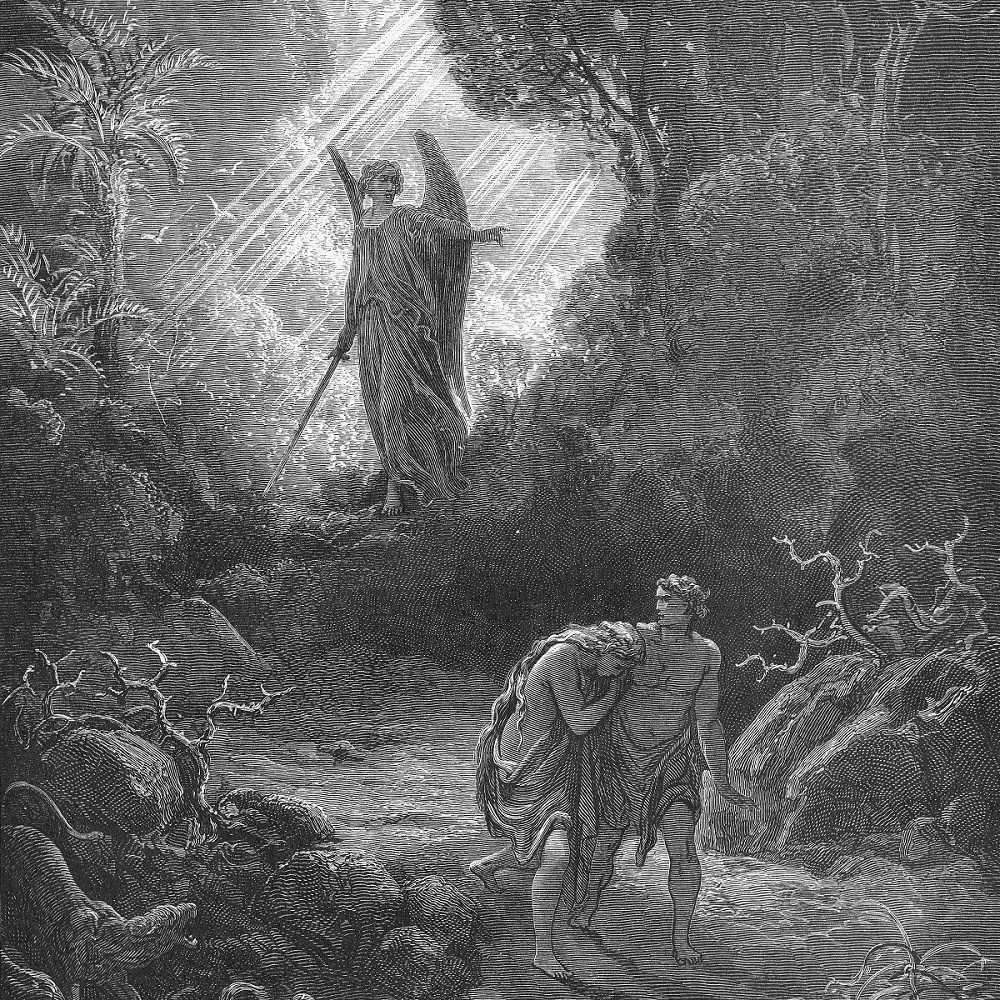
To answer this we will continue to wade in the waters of Genesis 3. Immediately after Adam and Eve sin we see how their human experience changes radically. In 3:7-8, “Then the eyes of both were opened, and they knew that they were naked. And they sewed fig leaves together and made themselves loincloths. And they heard the sound of the LORD God walking in the garden in the cool of the day, and the man and his wife hid themselves from the presence of the LORD God among the trees of the garden.”
- A new consciousness surfaced in them: the eyes were opened.
- Where goodness and purity had been enjoyed, now there was shame leading to a desire to hide by attempting to cloth each other.
- As for hiding the most blatant effect seen is their hiding from God. The relationship was not what it had been.
You may say: Sean you haven’t made any definitive statement on the condition of man after Adam’s disobedience. You are right. My one goal was to display how the two verses following the sin of man provides helpful examples of an alteration to the existence Adam and Eve had known.
As the Bible unfolds we see clear doctrinal statements by the prophets and apostles (what is called didactic writings) that plainly spell out what mankind became upon the sin in the Garden. Didactic writings (prophets and apostles) are given to help us understand narrative (stories, i.e. Genesis 3). On top of that, as the Bible progresses it has a habit of explaining things that have already been read (i.e. Who was the serpent in Genesis 3? We learn in Revelation 20:2 that it is Satan). Now we do not always have to wait until the last book of the Bible to get such answers, nonetheless, as each consecutive book is read we get answers to what has been read prior to. This is what James M. Hamilton calls “divine commentary”.
Let’s check out some divine commentary (prophets and apostles) to see what is communicated about the condition of man after he fell into temptation.
Divine Commentary: Romans 1-3
Just as the first three chapters of Genesis are foundational to the whole of scripture, so also the first three chapters of Romans are foundational to our understanding of God’s work of salvation. In my recent blog Reigning, Ruined, and Regenerated I asked the question: what kind of rescue do we need as sinners? How sinful are we? Paul spends his first 3 chapters answering that question. In short we see the following:
- Romans 1:18-32 — Paul lays out the ungodliness and unrighteousness of men in vast and specific terms. He specifically speaks of how morally corrupt and God hating the people are who are not apart of God’s covenant people the Jews. It is beyond the scope of this blog to go into great detail of Romans 1:18-32 yet I would encourage you to take 10 minutes and read over those 15 verses carefully.
- Romans 2:1-3:9 — Paul goes on to essentially tell the Jews that they have the advantage of God’s covenant promises and being recipients of God’s law, thus having God’s character revealed to them in a special way unlike anyone else. But, he does not stop there. He goes on to tell them that they are just as sinful as the gentiles he described in 1:18-32.
- Romans 3:10-20 — Paul opens by saying, “What then? Are we Jews any better off? No, not at all. For we have already charged that all, both Jews and Greeks, are under sin, as it is written…” He is showing the reader that all of mankind, Jew and gentile, is in the same situation. The very vast description of the sinfulness of man written out in 1:18-32 about the gentiles Paul would go on to say in 2:1, “…you [Jews] practice the very same things.” Here in 3:10-18 Paul walks us through passages from Psalms and Isaiah to show how radical and universal the effects of Adam’s sin was (see Reigning, Ruined, and Regenerated). I will also mention that Paul’s choice of Old Testament books was not random. Isaiah and Psalms are foundational books to understanding the Old Testament.
- Conclusion — The first three chapters of Romans need to be emphasized because they are dedicated to the doctrine of sin (harmatology). Paul spends Romans 1-11 explaining God’s work of salvation. Nearly three of those are dedicated to rigorously explaining the sinfulness of man. There are two reasons this is important: 1) If Paul thought 1/4 of his doctrinal statement on salvation should be dedicated to thoroughly explaining sin then we should give it much thought as the reader. 2) We should also give this section of scripture special attention when desiring to learn what God thinks about sin. Anytime a biblical author spends a lengthy portion on one topic, systematically explaining it, it is the place to be to get a healthy understanding of it (i.e. 1 Cor. 13 on love or Heb. 11 on faith or 1 Cor. 15 on resurrection).
Why spend so much time discussing the fall into sin and the effects thereof when this is a post about the function of the will of man? The reason for another lengthy discussion on sin is because it is necessary as we flesh out last weeks blog on T.U.L.I.P. The first letter stands for what is commonly called Total Depravity (better thought of as moral inability). That first point cannot be discussed unless we wade into the issue of man’s will; which in turn leads us to ask: What does the Bible teach us about the will of man after his fall into sin in Genesis 3? When you observe the universal and radical statements of Paul in Romans 3:10-18 we clearly see a condition of man that is without hope unto himself. Then there is the wide testimony of scripture:
- Genesis 6:5, “Then the LORD saw that the wickedness of man was great upon the earth, and that every inclination of the thoughts of his heart was altogether evil all the time.” This is the straight forward observation of the Lord regarding the sinfulness of man…which was no better after the flood (see Genesis 8:21).
- Jeremiah 17:9, “The heart is deceitful above all things, and desperately sick; who can understand it?”
- Read John 6:22-59
- Romans 8:7, “For the mind that is set on the flesh is hostile to God, for it does not submit to God’s law; indeed, it cannot.”
- Colossians 1:21-22, “And you, who once were alienated and hostile in mind, doing evil deeds, he has now reconciled in his body of flesh by his death, in order to present you holy and blameless and above reproach before him…”
There are certainly more texts to be given but I stop at Colossians with reason. You will notice that not only does it speak of hostility toward God (as did Romans 8:7) but goes on to speak of God’s work to reconcile. You will notice in many passages where the apostles speak of the progression of God’s redemptive work they will often begin by commenting on the severity of our sin (Ephesians 2:1-10; Titus 3:3-7). This creates perspective and exalts the grace of God to save. Weighty views of sin lead to high views of the grace of God. The same is true of Colossians 1 and our earlier text in Romans 3. In harmony with the whole of scripture Paul lays out the severe, unimaginable sinfulness of man which we are under, in bondage to and in the greatest need of rescue. In Romans 3:21-26 Paul launches into a deep and concise statement of the work of the Godhead to redeem. Only after he has left us realizing our hopelessness does he pull back the veil of what God the Father has accomplished in Christ at the cross. Sin must be seen to be sin before grace is beautiful. Where sin abounded in humanity, grace went further up and further in with far greater effect.
Summary: Ecclesiastes 7:29, “See, this alone I found, that God made man upright, but they have sought out many schemes.” God made man upright, that is the entirety of him, including his will. But when they sought after their own “schemes” in Genesis 3 we find the testimony of scripture revealing a severe shift in existence. There is what has been called a “Bondage of the Will.”
Objection: I have FREE WILL!!!
Finally a brief word on this common objection. Maybe such a concern is expressed by a sincere mind trying to reconcile the will of man with the sovereignty of God. Maybe it is asked aggressively. Or maybe you ask because you have heard it before and are echoing the sentiment you have frequently been exposed to by dear brethren.
However you may be approaching that question I would ask you: What is the basis for you to put forward this objection? What passage of scripture do you appeal to? The question is not what verse can you quote, but what passage do you point to? Is this a statement that you have come to trust because you have heard it from other Christians in your life or is it based on the testimony of scripture? All I say at this time is check your convictions regarding the will of man and its freedom to see what it is founded on.
This needs to be thought through because of what the objection implies.
Romans Continued
The claim that “free will” determines whether or not one is saved is in contradiction to Romans 4. When we respond with this view of human will we are intact saying that forgiveness was my choice. I decided to take God’s offer; God didn’t save me, he merely gave me the option. In Romans 4, following the train of thought laid out in Romans 1-3, emphasizes how grace is a gift from God, not his obligation. God never owes us grace because we believed, but by his grace we come to believe.
Conclusion
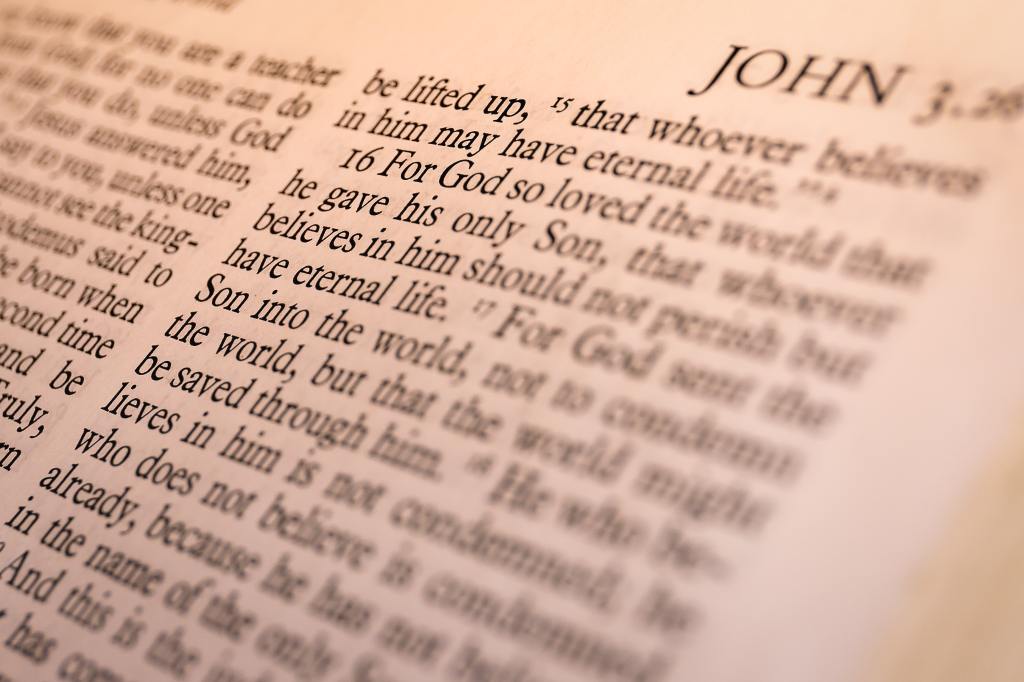
Romans 3:9, “…we have already charged that all, both Jews and Greeks, are under sin…” Every individual is under the power, corruption, and guilt of sin. In the terms seen Romans 1-3 this is not the partial state of each man, but that of his whole being (will included). Our will is free to do what it wants, but it will only do what it wants. The person whose will is “under sin” will only operate under the power and corruption of sin. The will does not of its own desire do what what is right or go to God (John 3:17-21).
Our understanding of the existence and ability of the human will must go hand-in-hand with our understanding of what sin has done to us. It has made us hostile to God (Col. 1:21) and God hating (Rom. 3:30). The only hope we have for a will that embraces God in love is for God to act in his amazing grace and free it from bondage to sin (aka – new birth or regeneration which will be discussed later).

Application
Great Sin & Great Grace: Maybe this is a first time you have heard some of this regarding the severity of sin. Maybe this is not new and you have disagreed with such ideas in the past, or maybe you confess these very truths personally. If you are the first I would encourage you to think about what has been written above and read the referenced passages which were not stated. I encourage you to do so for this reason: The bigger sin is in our mind the great God’s grace becomes. As God’s grace swells in our perspective our joy and worship naturally widen as well. If you are the second person who has heard this before yet disagrees I would ask the question posed above: On what passage of scripture do you base you conviction that human will is just as free now as it was before Genesis 3? But also how do you answer the passages posed above which strongly portray man helpless in sin? Finally, if you are person number three who holds to the beliefs spelled out above do not lightly breeze by but bask in the glorious truths you and I rejoice in. Give close attention to Genesis 1-3, Romans 1-3, or John 6 once again and praise our gracious savior.
Meditate on Romans 3:21-26: No matter which person you aligned with in the first point of application go to Romans 3:21-26 and soak it in. Grab a pen and write it out or high light the words which seem to be exceptionally important in the text or go on google and find your favorite preacher’s sermon on it or pray that God would give you understanding of his work and grace displayed in that text. In this passage the Christian’s joy has the potential of abounding for in it Paul speaks to us of the work of the Father in Christ at the cross like no other passage does.
 The Reforming Raker
Amazing in-depth study. I’m really enjoying these posts. Keeping copies!
On Tue, May 12, 2020 at 3:46 PM The Reforming Raker wrote:
> Pastor_M. posted: ” Apologies: My brain had rough couple of days from May > 9-11 as I recover from my stroke that set my writing back. Nothing to worry > about, just a cloudy mind. This was the reason for my post being one day > late. At age five my favorite movie hands down w” >
LikeLike